
A blow to the head can change everything—even when the damage isn't visible on a CT scan. Traumatic brain injuries range from concussions that doctors dismiss as minor to catastrophic injuries requiring lifetime care. At Logeman & Iafrate, P.C., our Livingston County traumatic brain injury attorneys have spent over 45 years representing TBI victims whose lives have been turned upside down by car crashes, motorcycle accidents, falls, and workplace incidents.
We understand what you're facing. Memory problems that make it hard to work. Concentration issues that frustrate your family. Personality changes that leave you feeling like a stranger to yourself. Headaches, dizziness, and fatigue that doctors can't see on imaging but that dominate your daily life. Insurance companies exploit these invisible injuries, claiming your symptoms are exaggerated or unrelated to the accident. We don't let them get away with it.
The Hidden Nature of Many Brain Injuries
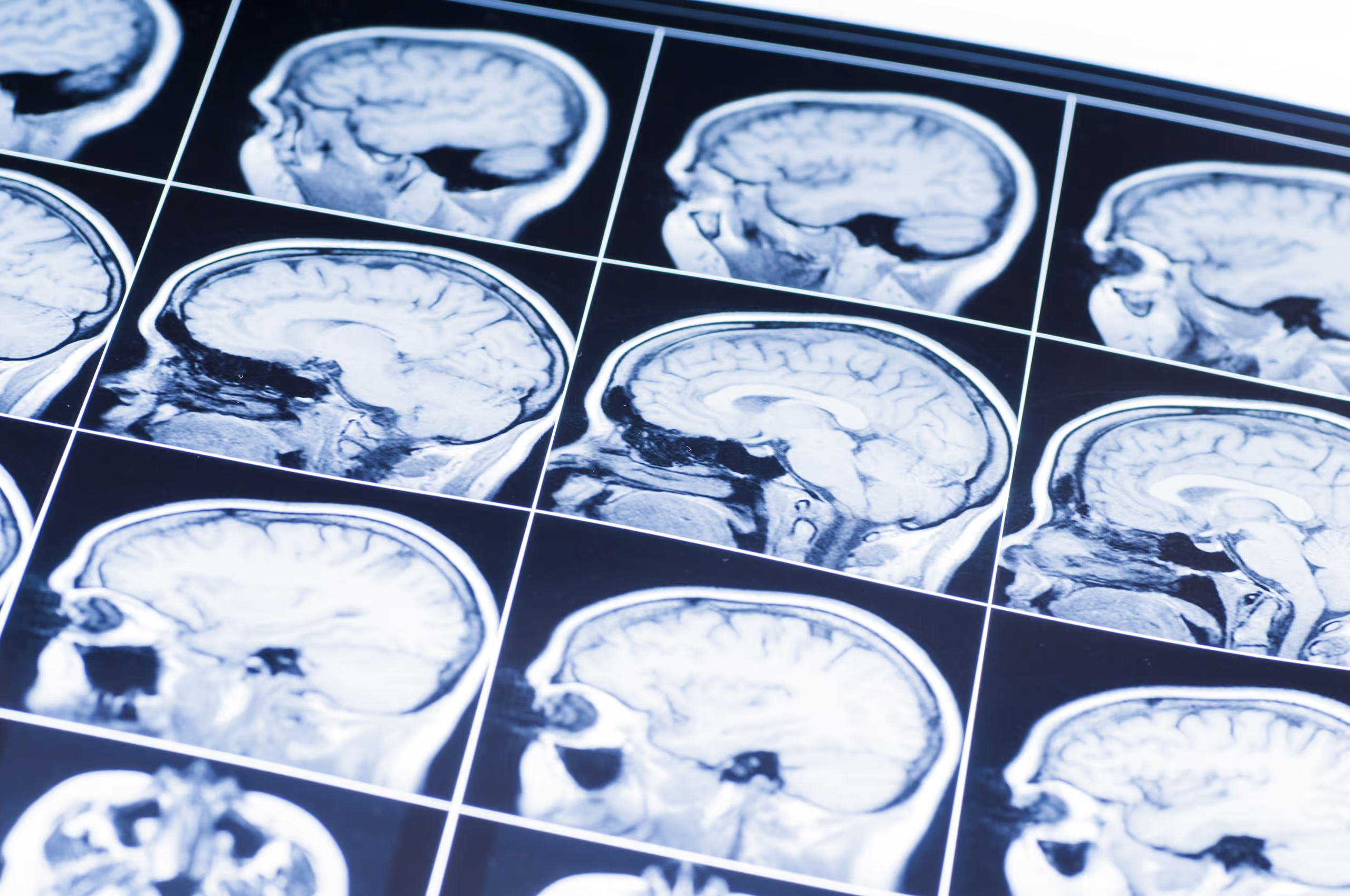
Emergency room doctors focus on life-threatening injuries—broken bones, internal bleeding, surgical emergencies. They often miss mild to moderate traumatic brain injuries, especially when initial CT scans appear normal. You may be sent home with instructions to rest, unaware that the impact to your head has caused diffuse axonal injury—microscopic tearing of brain tissue that won't show up on standard imaging.
Weeks or months later, the cognitive problems emerge. You struggle to focus at work. Your short-term memory fails you repeatedly. You experience mood swings, depression, or irritability that strain your relationships. You suffer persistent headaches and sensitivity to light and noise. These are real, diagnosable injuries—but proving them requires the right medical experts and legal team.
Symptoms That Demand Attention
If you've suffered head trauma in an accident, watch for these warning signs of traumatic brain injury:
- Cognitive impairments: Memory loss, difficulty concentrating, confusion, slowed thinking, trouble with problem-solving
- Physical symptoms: Persistent headaches, dizziness, balance problems, vision changes, sensitivity to light and sound, fatigue
- Emotional changes: Depression, anxiety, irritability, mood swings, personality changes, inappropriate emotional responses
- Sleep disturbances: Insomnia, sleeping more than usual, difficulty falling asleep or staying asleep
Don't assume these symptoms will resolve on their own. Document them carefully and seek evaluation from physicians experienced in diagnosing traumatic brain injuries, including neurologists and neuropsychologists.
Proving Your Brain Injury Claim
Insurance companies deploy predictable defenses against TBI claims. They'll argue your CT scan was normal, so you couldn't have suffered brain damage. They'll claim your cognitive problems stem from depression, stress, or pre-existing conditions unrelated to the accident. They'll hire defense medical examiners who spend thirty minutes with you and conclude there's nothing wrong.
We counter these tactics with thorough preparation and the right experts. Neuropsychological testing objectively documents cognitive deficits. Advanced imaging like DTI (diffusion tensor imaging) or functional MRI can reveal damage invisible on CT scans. Vocational experts demonstrate how your injuries affect your earning capacity. Life care planners calculate the cost of ongoing treatment and cognitive rehabilitation.
Our Livingston County TBI attorneys have handled these complex cases for decades. We know how to build the medical record, select credible experts, and present brain injury evidence in terms juries understand.
Compensation for Traumatic Brain Injury Victims
The consequences of a traumatic brain injury extend far beyond initial hospitalization. Many victims require years of treatment and never fully return to their pre-injury capabilities. Michigan law allows TBI victims to pursue comprehensive compensation including:
- No-fault PIP benefits: For auto accident victims, Michigan's no-fault system covers medical expenses, attendant care, cognitive rehabilitation, and wage loss benefits
- Medical expenses: Emergency treatment, hospitalization, neurological care, neuropsychological testing, cognitive therapy, psychiatric treatment, medications
- Lost income: Past wages lost during recovery and future diminished earning capacity when you can't return to your former occupation
- Attendant care: Assistance with daily activities when cognitive impairments affect your ability to function independently
- Pain and suffering: Compensation for the cognitive difficulties, emotional distress, and diminished quality of life caused by your brain injury
- Loss of consortium: Recovery for spouses whose relationships are damaged by personality changes and cognitive impairments
Severe Traumatic Brain Injuries
The most catastrophic brain injuries are immediately apparent. Coma, brain swelling requiring surgery, penetrating head wounds, and brain stem injuries leave victims facing permanent disability. These cases demand life care planning to project decades of medical needs, attendant care, adaptive equipment, and home modifications.
When a severe TBI leaves a victim unable to work or care for themselves, the financial stakes are enormous. Our attorneys work with medical experts, economists, and life care planners to document every dollar of future care. We fight for verdicts and settlements that provide for lifetime needs, not just immediate medical bills.
Why Livingston County Residents Choose Our Firm
Livingston County residents injured in Brighton, Howell, and throughout the area trust Logeman & Iafrate, P.C., because we take traumatic brain injury cases others consider too difficult. We've spent over 45 years proving cognitive impairments that insurance companies claim don't exist. We prepare every case for trial—and insurance companies know it.
Our track record speaks for itself. We've secured significant compensation for brain injury victims whose insurers denied all benefits. We've won jury verdicts against carriers who claimed normal CT scans meant no injury. We don't back down when the medical evidence is complicated or when insurance companies hire their own experts to contradict your treating physicians.
Get Help from Experienced Livingston County TBI Attorneys
If you or a loved one has suffered a traumatic brain injury in Livingston County, time matters. Evidence must be preserved, experts must be retained, and your medical treatment must be properly documented. Insurance companies start building their defense the moment they learn about your claim.
Contact Logeman & Iafrate, P.C., today for a free consultation. We handle traumatic brain injury cases on a contingency-fee basis—you pay nothing unless we recover compensation for you. Call (734) 994-0200 or reach out through our online contact form. Let us fight for the future care and compensation you deserve.
Contact Our Livingston County Traumatic Brain Injury Lawyers
Don't let insurance companies minimize your brain injury or deny the care you need. The attorneys at Logeman & Iafrate, P.C., have over 45 years of experience fighting for TBI victims throughout Livingston County and Michigan. We offer free consultations and handle cases on a contingency-fee basis—no fee unless we win.
Call (734) 994-0200 or complete our online form to schedule your free consultation today.
Frequently Asked Questions About Traumatic Brain Injuries in Livingston County
Can I have a serious brain injury even if my CT scan was normal?
Yes. CT scans are excellent for detecting skull fractures, bleeding, and swelling, but they often miss diffuse axonal injury—microscopic tearing of brain tissue common in concussions and mild TBI. Advanced imaging like DTI or functional MRI may reveal damage invisible on CT. More importantly, neuropsychological testing objectively documents cognitive impairments even when imaging appears normal. Don't let a normal CT scan discourage you from pursuing your claim.
What is a mild traumatic brain injury and how serious is it?
A mild traumatic brain injury (MTBI) or concussion can cause serious, long-lasting symptoms including headaches, dizziness, memory problems, difficulty concentrating, emotional instability, behavioral changes, and sleep disturbances. Despite being classified as "mild," these injuries can result in chronic cognitive impairment affecting your ability to work and maintain relationships. The term "mild" refers to the initial injury mechanism, not the long-term consequences.
How do you prove a brain injury when symptoms are invisible?
We rely on comprehensive neuropsychological testing that objectively measures cognitive function, memory, processing speed, and executive function. These tests reveal impairments that patients and families observe but that standard imaging can't show. We also use testimony from family members, coworkers, and treating physicians who can describe the before-and-after changes. Advanced imaging techniques and expert medical testimony complete the picture. Insurance companies can't dismiss objective testing results.
What defenses do insurance companies use in traumatic brain injury cases?
Insurance companies routinely argue that normal CT scans prove no injury occurred, that symptoms are caused by depression or pre-existing conditions unrelated to the accident, that cognitive problems result from lack of effort during testing (malingering), or that the victim's complaints are exaggerated. They hire defense medical examiners who conduct brief evaluations and conclude nothing is wrong. Our attorneys know these tactics and how to counter them with thorough medical evidence and credible expert testimony.
How long do I have to file a traumatic brain injury claim in Livingston County?
For third-party personal injury claims, Michigan's statute of limitations is generally three years from the date of injury. However, no-fault insurance claims for auto accidents have different deadlines—you must notify your insurer within one year to preserve PIP benefits. Brain injury symptoms sometimes emerge gradually, making early legal consultation critical. Contact our office as soon as possible to protect your rights and preserve evidence while it's still available.
Awards and Honors




.svg)