
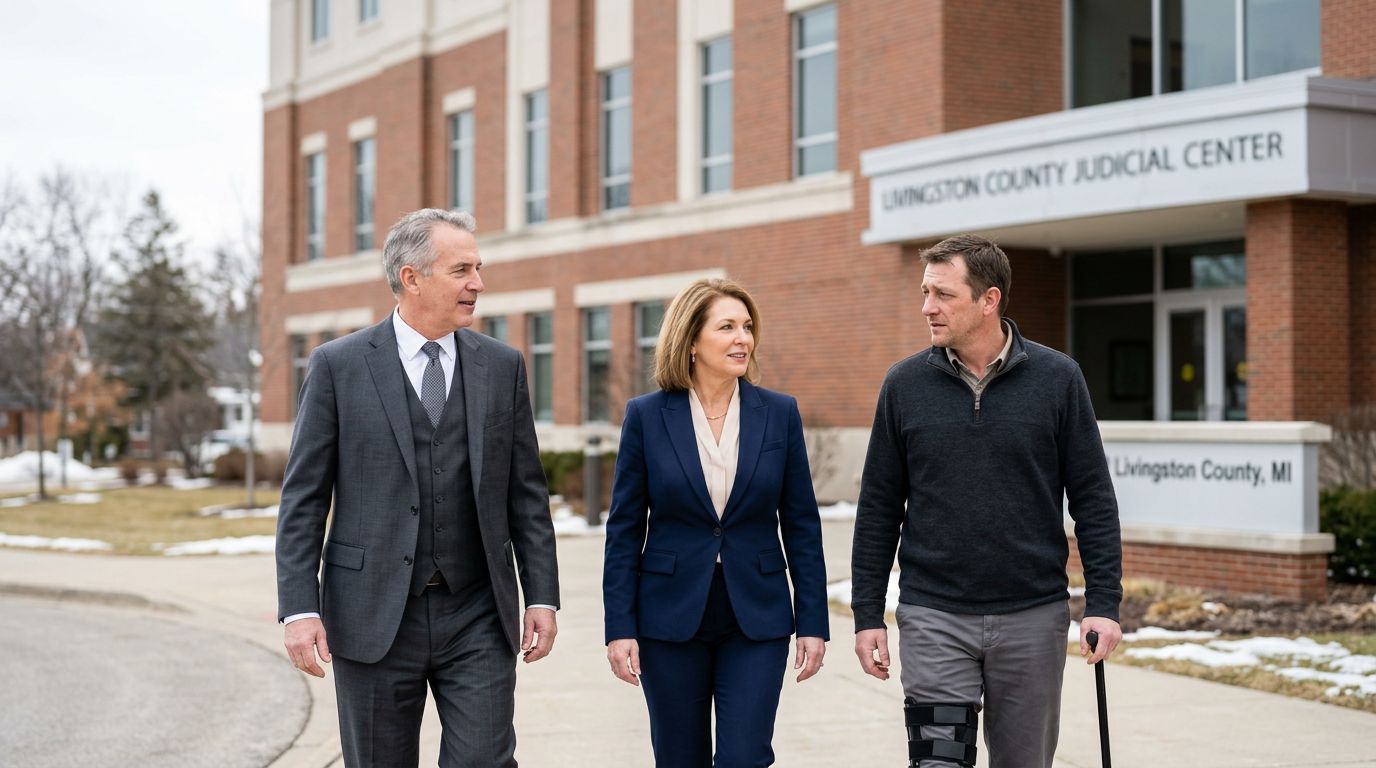
After a car accident in Livingston County, Michigan's unique legal landscape creates a significant hurdle between you and compensation for pain and suffering. Under Michigan law, you must prove your injuries meet the "serious impairment of body function" threshold before you can sue the at-fault driver for non-economic damages. Insurance companies routinely argue that injuries don't meet this standard—even when victims suffer genuine, life-altering harm.
At Logeman & Iafrate, P.C., we've spent over 45 years proving threshold injuries throughout Michigan, including Livingston County communities like Brighton, Howell, Hartland, and Fowlerville. We understand the medical evidence, legal arguments, and courtroom strategies that win serious impairment cases. When insurance companies claim your injuries aren't severe enough, we fight back with the expertise you need.
What Is Michigan's Serious Impairment Threshold?
Michigan's no-fault insurance system provides important benefits after car accidents—your own insurance covers medical expenses, wage loss, and other costs regardless of fault. But to recover pain and suffering compensation from the at-fault driver, you must clear Michigan's threshold requirement under MCL 500.3135.
A "serious impairment of body function" is defined as an objectively manifested impairment of an important body function that affects the person's general ability to lead his or her normal life. Michigan courts have established that all three elements must be present:
- Objectively manifested: The impairment must be observable and identifiable through medical testing, clinical examination, or diagnostic imaging—not just based on your subjective complaints of pain.
- Important body function: The injury must affect a body function that is of value, significance, or consequence to your life. Courts have found that mobility, cognitive function, ability to work, and ability to care for yourself or family are important body functions.
- Affects general ability to lead normal life: The injury must influence some of the person's capacity to live in their normal manner of living. This doesn't mean your life must be destroyed, but the injury should alter your lifestyle to an extent that is more than minor.
Insurance defense lawyers spend considerable effort trying to minimize your injuries and argue they don't meet this standard. They'll point to any activities you can still perform, any gaps in treatment, any pre-existing conditions, and any medical records that don't perfectly align with your complaints.
Injuries That Commonly Meet the Serious Impairment Standard
While each case is evaluated individually, certain injuries frequently satisfy Michigan's threshold requirement when properly documented and presented:
- Herniated or bulging discs requiring surgery or causing persistent radiculopathy
- Fractures to major bones requiring surgical repair or resulting in permanent limitations
- Rotator cuff tears and other significant shoulder injuries
- Knee injuries including torn ligaments (ACL, MCL) and meniscus damage
- Traumatic brain injuries even when classified as "mild" if cognitive effects persist
- Spinal cord injuries causing ongoing neurological symptoms
- Significant soft tissue injuries when they produce objective findings and lasting functional limitations
- Chronic pain conditions that can be objectively verified and substantially limit activities
The key is not just the diagnosis but the evidence demonstrating how the injury objectively impairs important functions and affects your ability to live normally. We work with your treating physicians, obtain necessary diagnostic testing, and when needed, retain medical experts who can testify to the nature and extent of your impairment.
Building the Evidence to Prove Your Threshold Injury
Winning a serious impairment case requires more than medical records showing you were hurt. Insurance companies will scrutinize every aspect of your life before and after the accident. Our attorneys build comprehensive evidence including:
Medical Documentation
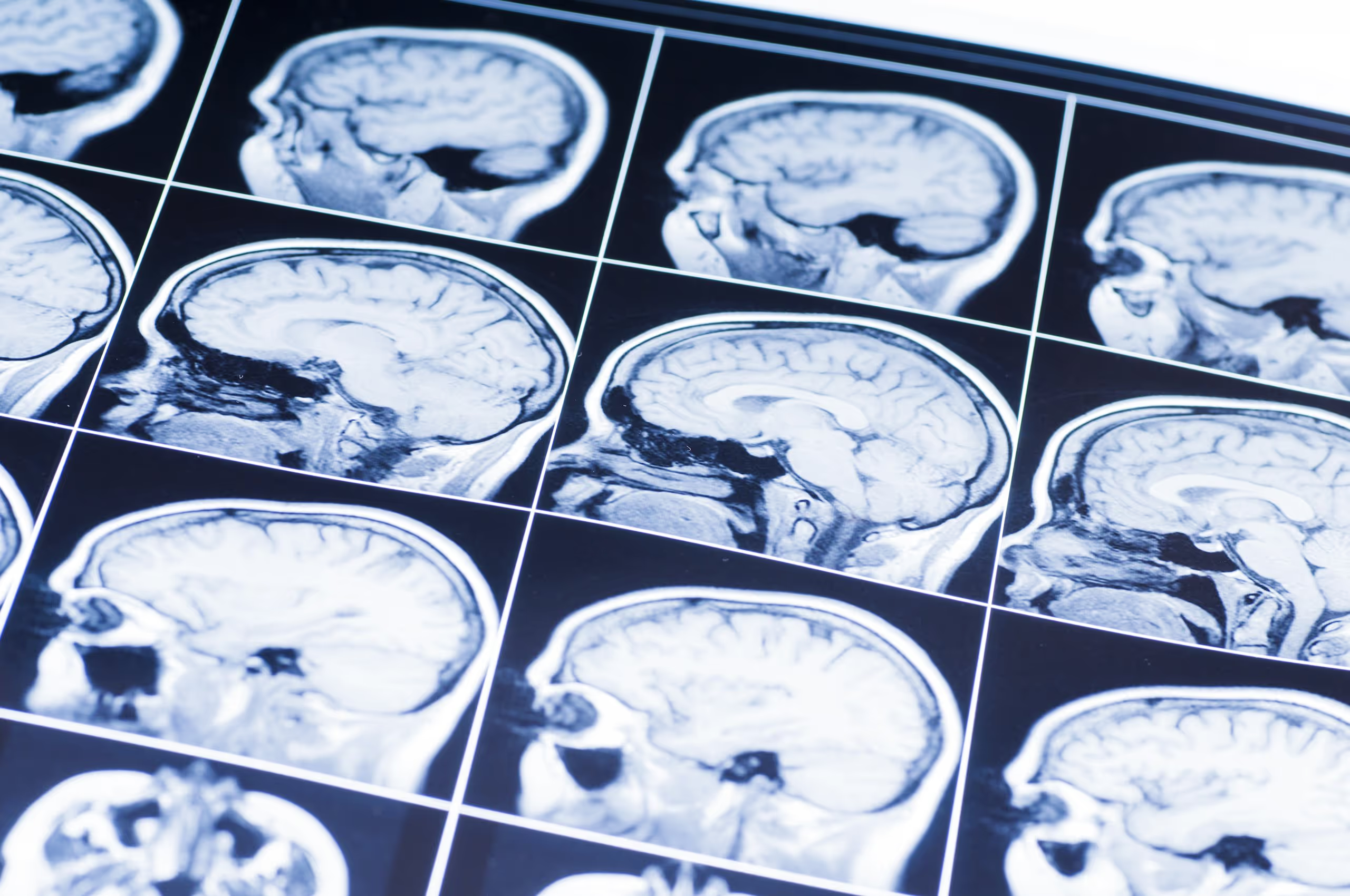
We ensure your medical records clearly document objective findings—MRI results showing disc herniations, X-rays revealing fractures, neurological testing demonstrating nerve damage, range-of-motion measurements showing decreased function. We work closely with your physicians to make sure clinical notes reflect the true impact of your injuries.
Testimony About Life Changes
Your testimony and that of family members, friends, and coworkers establishes how your injuries have altered your daily life. We document activities you can no longer perform, work modifications required, help you now need with household tasks, hobbies you've abandoned, and social activities you've given up.
Comparative Evidence
We establish your pre-accident capabilities through employment records, fitness activities, recreational pursuits, and daily routines. The contrast between your life before and after the collision demonstrates the genuine impact of your injuries.
Expert Medical Testimony
When necessary, we retain board-certified specialists who review your records, examine you, and provide expert opinions regarding the nature of your impairment, its objective manifestation, and its effect on your ability to function. These experts can counter the defense doctors insurance companies hire to minimize your injuries.
Common Defense Arguments and How We Counter Them
Insurance companies and their lawyers employ predictable strategies to defeat threshold claims. We've seen these tactics countless times and know how to dismantle them:
"The injury isn't objectively manifested." Defense lawyers argue that pain complaints without visible injuries on imaging don't meet the threshold. We respond by presenting clinical findings, functional testing results, and expert testimony explaining that many serious injuries produce objective evidence even when initial imaging appears normal.
"The plaintiff can still do most normal activities." The defense will compile lists of activities you've performed since the accident to argue your life hasn't really changed. We show the court that threshold injuries don't require complete disability—the standard is whether your general ability to lead your normal life has been affected, not whether you're completely incapacitated.
"Pre-existing conditions caused the problems." If you had any prior injuries or degenerative conditions, the defense will blame them for your current symptoms. We use medical causation evidence and expert testimony to establish that the accident aggravated, accelerated, or caused new injuries distinct from any pre-existing conditions.
"Treatment gaps show the injury wasn't serious." Insurance lawyers scrutinize your medical timeline for any periods without treatment. We explain legitimate reasons for gaps—whether financial concerns, difficulty finding specialists, work obligations, or the episodic nature of certain injuries—and show consistent treatment when evaluated fairly.
Why Serious Impairment Cases Require Trial-Ready Advocates
Insurance companies know that most personal injury firms avoid trial preparation and pressure clients to accept inadequate settlements. When you hire Logeman & Iafrate, P.C., insurers understand we're prepared to take your case to a Livingston County jury if necessary.
That preparation includes retaining qualified medical experts, deposing defense doctors to expose weaknesses in their opinions, developing compelling visual presentations of your injuries and their impact, and presenting your story in a way that resonates with jurors who understand the real-world consequences of serious injuries.
Our track record speaks to this commitment. We've recovered substantial verdicts and settlements for clients throughout Michigan when insurance companies initially denied their threshold claims. That trial-ready approach often leads to favorable settlements when insurers realize we won't back down.
The Compensation Available When You Meet the Threshold
Proving serious impairment unlocks compensation beyond what Michigan's no-fault system provides. Once you establish threshold, you can pursue the at-fault driver for:
- Pain and suffering: Compensation for the physical pain, emotional distress, and diminished quality of life your injuries have caused.
- Excess economic damages: Medical expenses beyond your PIP coverage limits, full wage loss without the no-fault limitations, and other economic losses not covered by first-party benefits.
- Loss of consortium: Your spouse may recover for the loss of companionship, affection, and services resulting from your injuries.
- Permanent impairment: Additional compensation when injuries result in permanent physical limitations, scarring, or disability.
These damages can be substantial in serious injury cases—often far exceeding the no-fault benefits available. That's why insurance companies fight threshold claims so aggressively and why you need experienced legal representation to protect your rights.
Time Limits for Serious Impairment Claims in Livingston County
Michigan law generally requires you to file your third-party lawsuit against the at-fault driver within three years of the accident date. However, waiting too long creates practical problems even before the deadline expires. Witnesses' memories fade, medical records become harder to obtain, and insurance companies grow more skeptical about the connection between your current condition and the accident.
We recommend consulting an attorney soon after your accident—while you're still treating, while evidence remains fresh, and while we can help guide your medical documentation to support your eventual threshold claim.
We Take Cases Others Won't and Win Cases Others Can't
Many personal injury firms evaluate serious impairment cases based on how easily they'll settle, not how strong they are when properly prepared. We take a different approach. Our attorneys accept challenging threshold cases that other lawyers decline, invest in the medical expertise necessary to prove complex injuries, and prepare every case for trial from day one.
If you've been seriously injured in a car accident in Livingston County and the insurance company is arguing your injuries don't meet the threshold, we want to review your case. We offer free consultations and handle cases on a contingency-fee basis—you pay nothing unless we recover compensation for you.
Contact Our Livingston County Serious Impairment Attorneys Today
Don't let insurance company lawyers convince you that your serious injuries don't matter under Michigan law. Our attorneys have decades of experience proving threshold cases and recovering full compensation for injured clients throughout Livingston County.
Call our Ann Arbor office at (734) 994-0200 or complete our online contact form to schedule your free consultation. We'll evaluate your injuries, explain whether you meet Michigan's serious impairment standard, and outline the legal strategy necessary to maximize your recovery.
We handle serious impairment claims on a contingency-fee basis. You pay no legal fees unless we win your case. Let us fight by your side while you focus on healing.
Frequently Asked Questions About Serious Impairment Claims in Livingston County
What exactly does "serious impairment of body function" mean in Michigan?
Under MCL 500.3135, serious impairment means an objectively manifested impairment of an important body function that affects your general ability to lead your normal life. All three elements must be present: objective medical evidence of the impairment, the injury must affect a body function that matters to your life, and the impairment must alter your lifestyle to more than a minor extent. It's a fact-intensive analysis that requires substantial evidence.
Can I still recover compensation if I've returned to work after my accident?
Yes. Returning to work doesn't automatically defeat a serious impairment claim. The question is whether your injuries affect your general ability to lead your normal life—which may include modifications at work, inability to perform certain tasks, chronic pain during work activities, or limitations in other life areas. We present evidence showing how your injuries continue to impact your life despite your efforts to maintain employment.
What if my MRI or CT scan looks normal but I still have serious pain?
Normal imaging doesn't necessarily defeat a threshold claim. Many serious injuries produce objective findings through clinical examination, functional testing, or specialized diagnostic studies even when standard imaging appears unremarkable. We work with medical experts who can explain the mechanism of your injury and present objective evidence beyond imaging studies. However, purely subjective pain complaints without objective findings make threshold cases significantly more challenging.
How do pre-existing conditions affect my serious impairment claim?
Pre-existing conditions don't bar recovery if the accident aggravated, accelerated, or worsened your condition, or caused new injuries in addition to existing problems. We establish medical causation through your treating physicians and expert testimony showing how the accident changed your condition. The key is demonstrating that your current impairment and limitations stem from the accident, not just the natural progression of pre-existing issues.
How long does a serious impairment case typically take in Livingston County?
The timeline varies based on the complexity of your injuries, the defendant's willingness to negotiate reasonably, and court scheduling. Many cases resolve through settlement within one to two years, though complex cases requiring extensive medical evaluation or those proceeding to trial may take longer. We balance efficient resolution against the need to fully understand your long-term prognosis before settling.
What if the insurance company says my injury is "too minor" to meet the threshold?
Insurance companies routinely minimize legitimate injuries and argue they don't meet the threshold. Don't accept their characterization. Our attorneys obtain your complete medical records, consult with your physicians, and when necessary retain medical experts to establish the true nature and extent of your impairment. We've successfully proven threshold injuries in many cases where insurance companies initially claimed the injuries were too minor.
Do I need to hire a medical expert to win my serious impairment claim?
Not always, but in contested cases, expert medical testimony often proves essential. Defense lawyers will hire doctors to examine you and testify that your injuries don't meet the threshold. To counter their experts and fully explain your injuries to a judge or jury, you typically need your own qualified medical expert. We evaluate each case individually and invest in expert testimony when necessary to win.
Awards and Honors




.svg)