
Livingston County Spinal Cord Injury Attorneys
Organize the evidence and coverage questions for spinal cord injuries in Livingston County. Free case review through our Ann Arbor office.
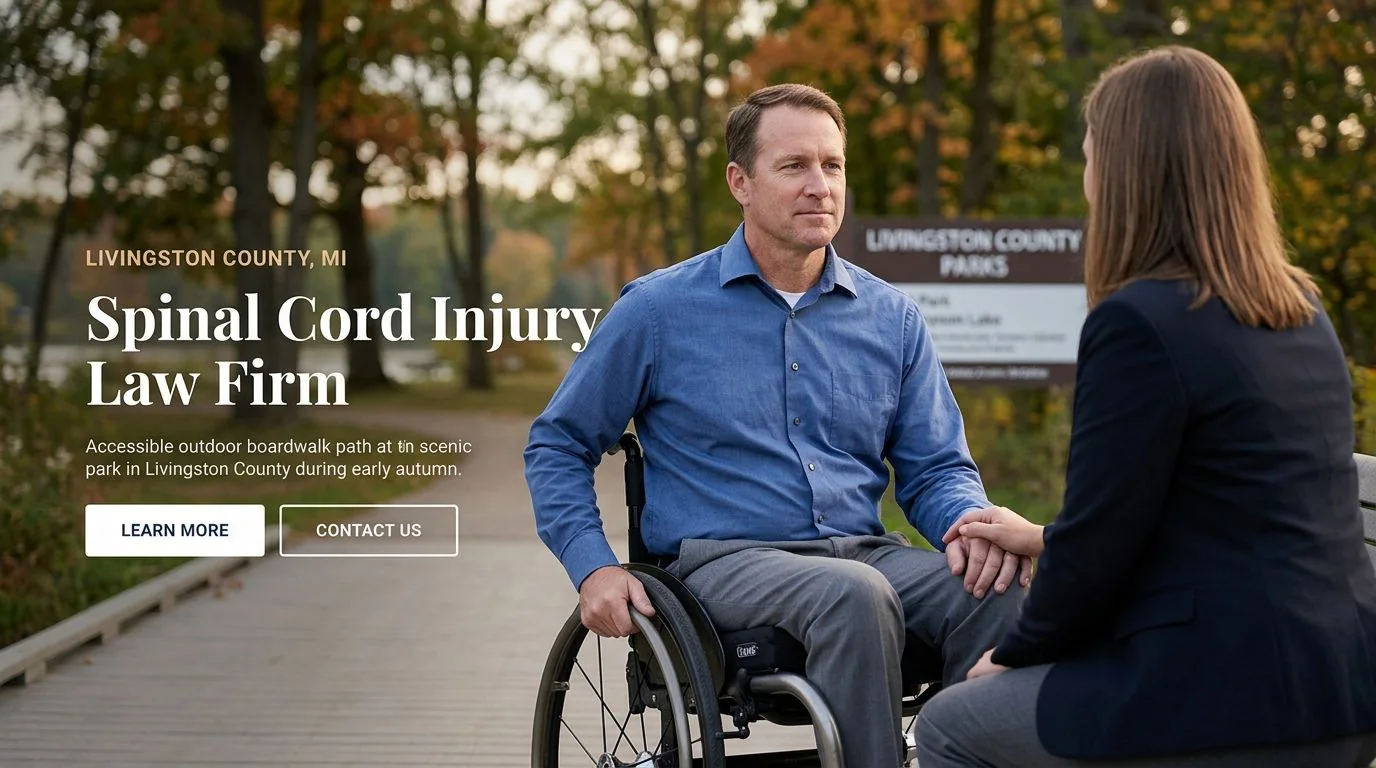
A spinal cord injury can shatter your independence in seconds. Whether you were hurt in a crash on US-23, injured at a Livingston County construction site, or suffered a fall due to unsafe property conditions, these catastrophic injuries demand immediate medical intervention and aggressive legal representation.
At Logeman & Iafrate, P.C., our Livingston County spinal cord injury attorneys understand what you're facing. We've spent over 45 years helping paralysis victims across Michigan secure the comprehensive compensation needed for lifetime care. When your ability to work, walk, or live independently disappears because of someone else's negligence, we fight to hold them accountable.
Understanding Spinal Cord Injuries
Keep imaging, specialist findings, rehabilitation recommendations and equipment or assistance needs together. Separate documented future-care recommendations from a general estimate of what another person’s care might cost.
Spinal cord injuries affect different body functions depending on injury location and severity:
- Complete injuries result in total loss of motor function and sensation below the injury site
- Incomplete injuries allow some remaining function or sensation
- Cervical spine injuries can cause quadriplegia, affecting all four limbs and requiring ventilator support
- Thoracic and lumbar injuries typically cause paraplegia, affecting the lower body and requiring wheelchair mobility
Calculating Lifetime Care Costs Families
Our attorneys work with life care planners and medical experts to document comprehensive damages including:
- Emergency treatment, surgery, and intensive care following your injury
- Long-term rehabilitation at specialized spinal cord injury facilities
- Adaptive equipment including wheelchairs, patient lifts, and mobility devices
- Home modifications for accessibility—ramps, widened doorways, roll-in showers, and adaptive technology
- 24-hour attendant care or skilled nursing assistance for daily living activities
- Vehicle modifications for wheelchair accessibility and adaptive driving controls
- Future medical complications including infections, pressure sores, and secondary conditions
- Lost earning capacity for careers you can no longer pursue
- Pain, suffering, and loss of life's enjoyment
Third-Party Claims Beyond No-Fault Benefits
When another party's negligence caused your spinal cord injury, you may pursue compensation beyond no-fault benefits. If your injuries meet Michigan's serious impairment threshold—an objectively manifested impairment affecting your ability to lead your normal life—you can file a third-party lawsuit against the at-fault driver for pain and suffering and excess economic damages.
Construction accidents may involve multiple liable parties beyond your employer, including general contractors who failed to maintain safe common work areas, property owners, or equipment manufacturers whose defective products contributed to your fall or crushing injury.
Common Causes of Spinal Cord Injuries
We represent Livingston County residents whose lives changed forever due to:
- High-speed highway crashes on I-96, US-23, and M-36 involving excessive speed, distracted driving, or impaired motorists
- Rollover accidents causing violent trauma as occupants are ejected or trapped
- Commercial truck collisions where massive vehicles crush passenger cars
- Motorcycle accidents leaving riders with no protective barrier against impact
- Construction falls from scaffolding, roofs, or ladders at residential and commercial sites
- Diving accidents at Livingston County lakes and pools causing cervical spine fractures
- ATV and recreational vehicle crashes on private property
- Medical malpractice including surgical errors damaging the spinal cord
Preparing Your Case for Maximum Recovery
They deploy aggressive defense tactics, arguing that injuries aren't as severe as claimed, that pre-existing conditions contributed to your paralysis, or that treatment recommendations exceed what's medically necessary.
Our investigation begins immediately, preserving critical evidence before it disappears:
- Accident scene documentation including photos, measurements, and witness statements
- Police reports and crash reconstruction analysis
- Medical records establishing the full extent of spinal trauma and prognosis
- Employment records documenting your lost earning capacity
- Life care plans detailing decades of future medical needs and costs
- Expert testimony from spinal cord injury specialists, rehabilitation physicians, and economists
Record resources and next steps
If court proceedings already exist, Livingston County Circuit Court records can help identify the relevant court record. It does not determine where a new claim should be filed.
Use the Livingston County resource hub for local record routing and consultation planning, and the spinal cord injuries practice guide for the broader claim explanation.
Discuss your claim
Logeman & Iafrate, P.C. serves Michigan injury clients from 2950 S. State Street, Suite 400, Ann Arbor, MI 48104. Call (734) 994-0200 or request a free consultation. Describe the incident, available records and any insurer correspondence. Confirm consultation arrangements before traveling.
Our published verdicts and settlements identify the matters described there. Read the claim type and venue as stated; a result does not establish local experience in another place or predict another case’s outcome.
Frequently Asked Questions About Spinal Cord Injury Claims
What compensation is available for spinal cord injury victims?
Compensation depends on how your injury occurred. For auto accidents, Michigan's no-fault system provides Personal Injury Protection benefits covering medical expenses, attendant care, wage loss, and home modifications—subject to your policy's coverage cap. If another driver caused your crash and your injuries meet Michigan's serious impairment threshold, you can also pursue a third-party claim for pain and suffering, full wage loss, and excess medical costs beyond your PIP limits. For workplace injuries, workers' compensation provides medical coverage and wage benefits, but you may also have third-party claims against general contractors, property owners, or equipment manufacturers.
How do you prove lifetime damages in a spinal cord injury case?
We work with life care planners who evaluate your specific injury level, prognosis, and medical needs to project comprehensive lifetime costs. This includes ongoing rehabilitation, adaptive equipment replacement as technology evolves, home and vehicle modifications, attendant care hours adjusted for inflation, management of secondary complications like infections and pressure sores, and psychological counseling. We also retain vocational experts to document your lost earning capacity and economists to present future damages in present-value terms that judges and juries can understand.
Which records help assess the losses?
Keep treatment records, bills, work restrictions, pay information and recommendations for future support. The review should distinguish documented losses, available coverage and disputed issues; another person’s verdict is not a value for this claim.
Can I receive both workers' compensation and sue a third party for my spinal cord injury?
Absolutely. If your spinal cord injury occurred at a Livingston County construction site or workplace, you're entitled to workers' compensation benefits from your employer regardless of fault. Additionally, you can pursue third-party claims against general contractors who failed to maintain safe common work areas, subcontractors whose negligence contributed to your fall, property owners, equipment manufacturers whose defective products caused your injury, or architects and engineers. These third-party claims provide compensation for pain and suffering and other damages not available through workers' compensation.
What deadlines apply to spinal cord injury claims?
Deadlines vary by claim type. For no-fault PIP benefits after auto accidents, you must notify your insurer within one year of the accident. For third-party negligence claims against at-fault drivers, the statute of limitations is generally three years. Workers' compensation claims require reporting your injury within 90 days and filing within two years. Product liability claims against equipment manufacturers may have different deadlines. Because spinal cord injuries involve multiple overlapping claims and potential defendants, consulting an experienced attorney immediately preserves all your legal options.
Awards and Honors



We Stand with You through the Hardest Times, Advocating Vigorously for Your Rights.
At our personal injury law practice, we are prepared to handle claims involving car, truck, bus, bicycle, and pedestrian accidents; slip-and-falls and other premises liability claims; product liability claims; claims for compensation for brain and spinal cord injuries; and claims and lawsuits for wrongful death.
We help clients in Ann Arbor, Detroit and throughout Michigan recover the benefits they need and deserve. Our commitment to service is absolute. Please feel free to contact our firm at any time for advice or help with your personal injury claim.

What Our Clients Say About Us
Cases won, lives changed, and we are happy to have helped each one of our clients.



Schedule a Free Case Review with a Lawyer
Don't face this alone. Let us review your case and show you what's possible. We never charge legal fees unless we recover damages on your behalf and the initial consultation is free as well. Reach out to us today.