
Livingston County Motorcycle Accident Attorneys
Organize the evidence and coverage questions for motorcycle accidents in Livingston County. Free case review through our Ann Arbor office.
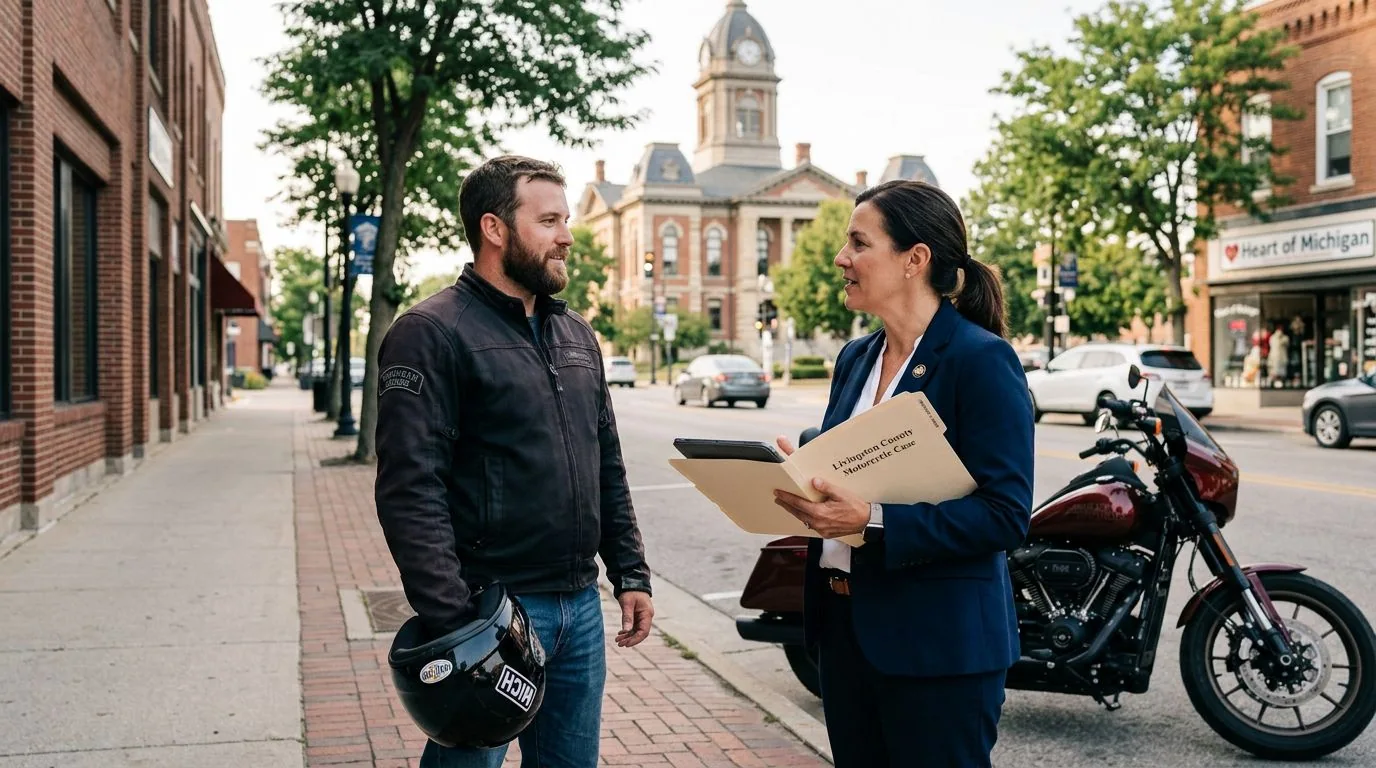
Motorcyclists in Livingston County face significant dangers from distracted drivers, road hazards, and motorists who simply don't see riders—even when they should be clearly visible. When a crash happens, the results are often devastating. Without the protective barrier of a car, riders suffer severe injuries that change lives in an instant.
At Logeman & Iafrate, P.C., we've spent over 45 years fighting for injured motorcyclists throughout Michigan. We understand the unique challenges riders face: insurance companies that blame the victim, medical bills that mount quickly, and the long road to recovery ahead.
Why Motorcycle Accidents Are So Dangerous
Preserve the motorcycle, riding equipment, scene evidence and witness details. Identify other vehicles and available policies; a coverage question and an accusation about rider fault require separate investigation.
- Fail to check blind spots before changing lanes
- Turn left across a rider's path at intersections
- Follow too closely and can't stop in time
- Drive distracted by phones, passengers, or navigation systems
- Misjudge a motorcycle's speed or distance
Recent studies show motorcycles account for 14 percent of traffic fatalities nationwide while representing only 3 percent of registered vehicles. In Livingston County, riders on US-23, I-96, and Grand River Avenue face particular risks from high-speed traffic and driver inattention.
Insurance Coverage Gaps That Leave Riders Vulnerable
Michigan law creates a serious problem for motorcyclists. Under the state's no-fault system, the vehicle that strikes a motorcycle is responsible for paying medical expenses—but the rider's own motorcycle policy typically provides no first-party medical coverage unless specifically purchased as an optional add-on.
This means if you're injured in a motorcycle crash, your recovery depends entirely on:
- The striking driver's insurance company paying your medical bills promptly and fully
- Any medical payment coverage you purchased on your motorcycle policy
- Your health insurance (which may seek reimbursement later)
- Out-of-pocket payment if coverage is insufficient
Since Michigan eliminated mandatory unlimited lifetime medical coverage in 2020, gaps in coverage have become more common and more dangerous. We strongly advise motorcyclists to purchase additional medical coverage on their policies—it's generally inexpensive and can prevent financial catastrophe after a serious accident.
Severe Injuries That Motorcyclists Suffer Crashes
The lack of physical protection means motorcycle accidents cause injuries far more severe than typical car crashes:
Traumatic Brain Injuries and Concussions
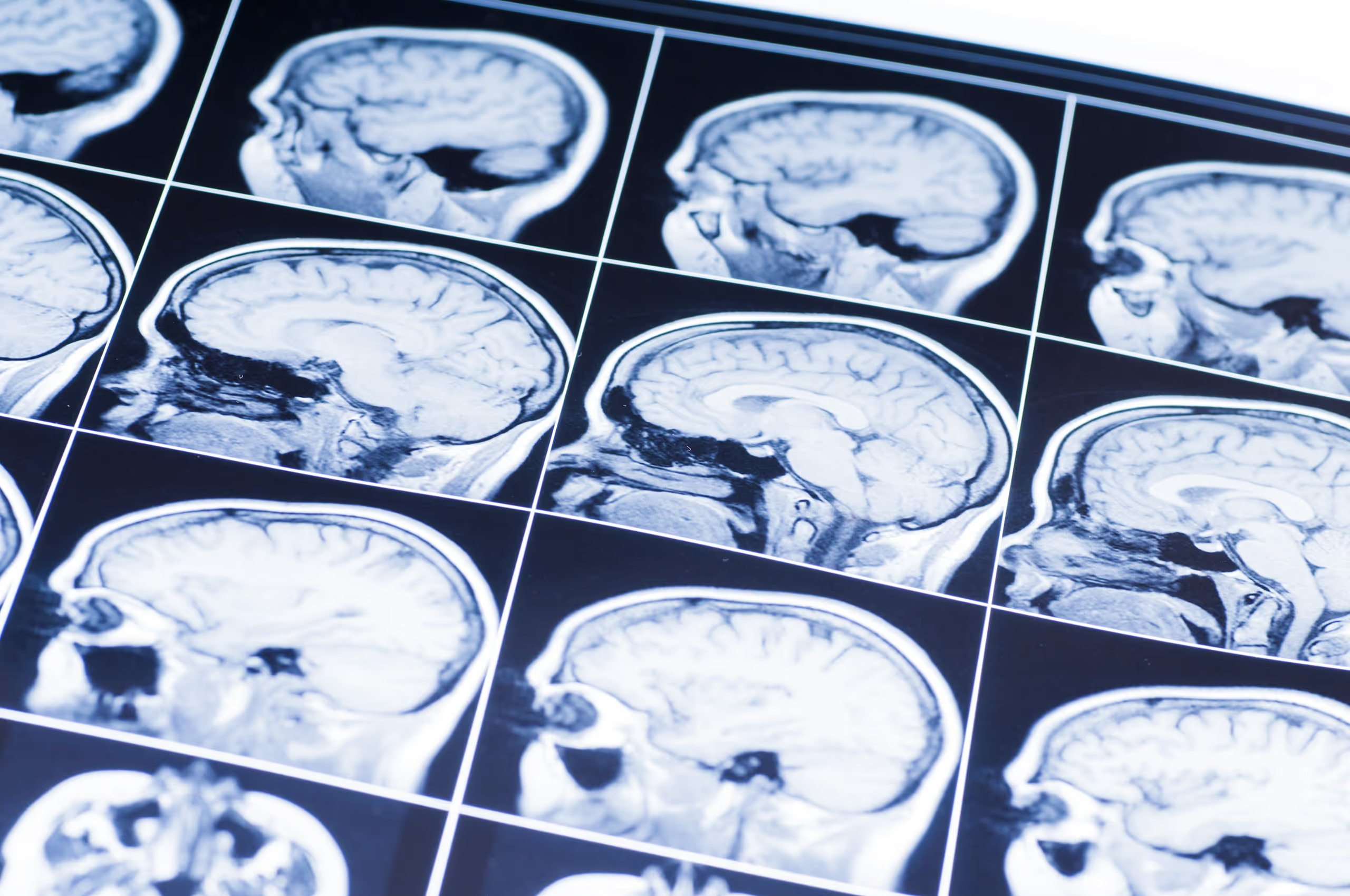
Even with a DOT-certified helmet, head trauma remains common. The National Highway Traffic Safety Administration estimates helmets are 37% effective in preventing fatal injuries to riders and 41% effective for passengers. Concussions and traumatic brain injuries can cause lasting cognitive problems, memory loss, personality changes, and chronic headaches.
Spinal Cord Damage and Paralysis
The impact of a collision or the trauma of being thrown from a bike can damage the spinal column. These injuries often result in chronic pain, reduced mobility, or permanent paralysis requiring lifetime care and significant home modifications.
Broken Bones and Orthopedic Trauma
Riders instinctively use their arms to brace for impact, leading to fractures in the shoulders, arms, wrists, and hands. Leg injuries—including hip fractures, shattered knees, and ankle trauma—are equally common when the motorcycle is struck or when the rider lands after being thrown.
Road Rash and Soft Tissue Injuries
Sliding across pavement causes severe abrasions that damage skin, muscle, and connective tissue. These injuries are painful, prone to infection, and often require skin grafts and extensive treatment. Protective riding gear reduces severity but can't eliminate the risk entirely.
Amputation Injuries
Direct impact to unprotected limbs can cause traumatic amputations at the scene or injuries so severe that surgical amputation becomes necessary. These life-altering injuries require prosthetics, extensive rehabilitation, and adaptation to permanent disability.
Building Your Motorcycle Accident Case
Motorcycle accident claims require immediate investigation and aggressive advocacy. Our attorneys begin working on your case right away:
- Securing the accident scene evidence including skid marks, debris patterns, and road conditions
- Obtaining police reports and witness statements before memories fade
- Working with accident reconstruction experts who can establish fault and demonstrate how the crash occurred
- Documenting all injuries with medical records and expert testimony about long-term impacts
- Fighting insurance company denials and low-ball settlement offers
- Preserve the motorcycle, riding equipment, scene evidence and witness details. Identify other vehicles and available policies; a coverage question and an accusation about rider fault require separate investigation.
Insurance companies often try to blame motorcyclists, claiming they were speeding, weaving through traffic, or somehow at fault.
What Compensation Can You Recover After a Motorcycle Crash?
Michigan law allows injured motorcyclists to pursue multiple types of damages:
Medical Expenses and Future Care Costs
All reasonable and necessary medical treatment including emergency care, surgery, hospitalization, rehabilitation, physical therapy, medication, and adaptive equipment. Future medical needs must be calculated and included in your claim.
Wage Loss and Diminished Earning Capacity
Compensation for income lost during recovery, plus reduced earning capacity if your injuries prevent you from returning to your previous work or earning the same income.
Pain and Suffering
Non-economic damages for physical pain, emotional distress, loss of enjoyment of life, and the psychological impact of your injuries.
Attendant Care and Home Modifications
If your injuries require ongoing personal assistance or modifications to your home for accessibility, these costs can be substantial and must be included in your recovery.
The key to maximizing your recovery is thorough documentation and experienced legal representation that understands both Michigan's no-fault system and third-party liability claims.
Record resources and next steps
For a traffic incident, consult Michigan State Police’s crash-report guidance and the investigating agency identified in the report.
Use the Livingston County resource hub for local record routing and consultation planning, and the motorcycle accidents practice guide for the broader claim explanation.
Discuss your claim
Logeman & Iafrate, P.C. serves Michigan injury clients from 2950 S. State Street, Suite 400, Ann Arbor, MI 48104. Call (734) 994-0200 or request a free consultation. Describe the incident, available records and any insurer correspondence. Confirm consultation arrangements before traveling.
Our published verdicts and settlements identify the matters described there. Read the claim type and venue as stated; a result does not establish local experience in another place or predict another case’s outcome.
Frequently Asked Questions About Motorcycle Accidents
What should I do immediately after a motorcycle accident?
Seek medical attention immediately, even if injuries seem minor. Call 911 to report the accident and ensure police document the scene. If possible, take photos of the scene, your motorcycle, the other vehicle, and any visible injuries. Collect contact information from witnesses and the other driver. Notify your insurance company, but avoid making recorded statements or admitting fault. Contact an experienced motorcycle accident attorney as soon as possible to protect your rights.
Does my motorcycle insurance policy cover my medical bills after an accident in Michigan?
Probably not—unless you specifically purchased medical coverage as an add-on. Under Michigan's no-fault system, motorcycles are not automatically covered for first-party medical benefits. The vehicle that strikes your motorcycle is responsible for paying your medical expenses, but gaps in coverage are common. We strongly recommend purchasing additional medical coverage on your motorcycle policy to protect yourself.
What if the driver who hit me doesn't have insurance or enough coverage?
If the at-fault driver is uninsured or underinsured, you may be able to recover compensation through your own uninsured/underinsured motorist coverage if you purchased it. You may also have claims against other potentially liable parties such as the vehicle owner, an employer if the driver was working, or a bar or restaurant that overserved an intoxicated driver. Our attorneys investigate all possible sources of recovery.
How long do I have to file a motorcycle accident claim?
Michigan's statute of limitations for personal injury claims is generally three years from the date of the accident. However, filing promptly is critical. Evidence disappears, witnesses' memories fade, and insurance companies begin building their defense immediately. The sooner we start working on your case, the stronger your claim will be. Contact us as soon as possible after your accident.
Will I have to go to court for my motorcycle accident case?
Many cases settle through negotiation before trial. That preparation often leads to better settlement offers. If the insurance company refuses to offer fair compensation, we're fully prepared to take your case to a jury and fight for the verdict you deserve.
Awards and Honors



We Stand with You through the Hardest Times, Advocating Vigorously for Your Rights.
At our personal injury law practice, we are prepared to handle claims involving car, truck, bus, bicycle, and pedestrian accidents; slip-and-falls and other premises liability claims; product liability claims; claims for compensation for brain and spinal cord injuries; and claims and lawsuits for wrongful death.
We help clients in Ann Arbor, Detroit and throughout Michigan recover the benefits they need and deserve. Our commitment to service is absolute. Please feel free to contact our firm at any time for advice or help with your personal injury claim.
What Our Clients Say About Us
Cases won, lives changed, and we are happy to have helped each one of our clients.



Schedule a Free Case Review with a Lawyer
Don't face this alone. Let us review your case and show you what's possible. We never charge legal fees unless we recover damages on your behalf and the initial consultation is free as well. Reach out to us today.