Insurance Dispute Resolution in Livingston County, MI
Organize the evidence and coverage questions for insurance disputes in Livingston County. Free case review through our Ann Arbor office.
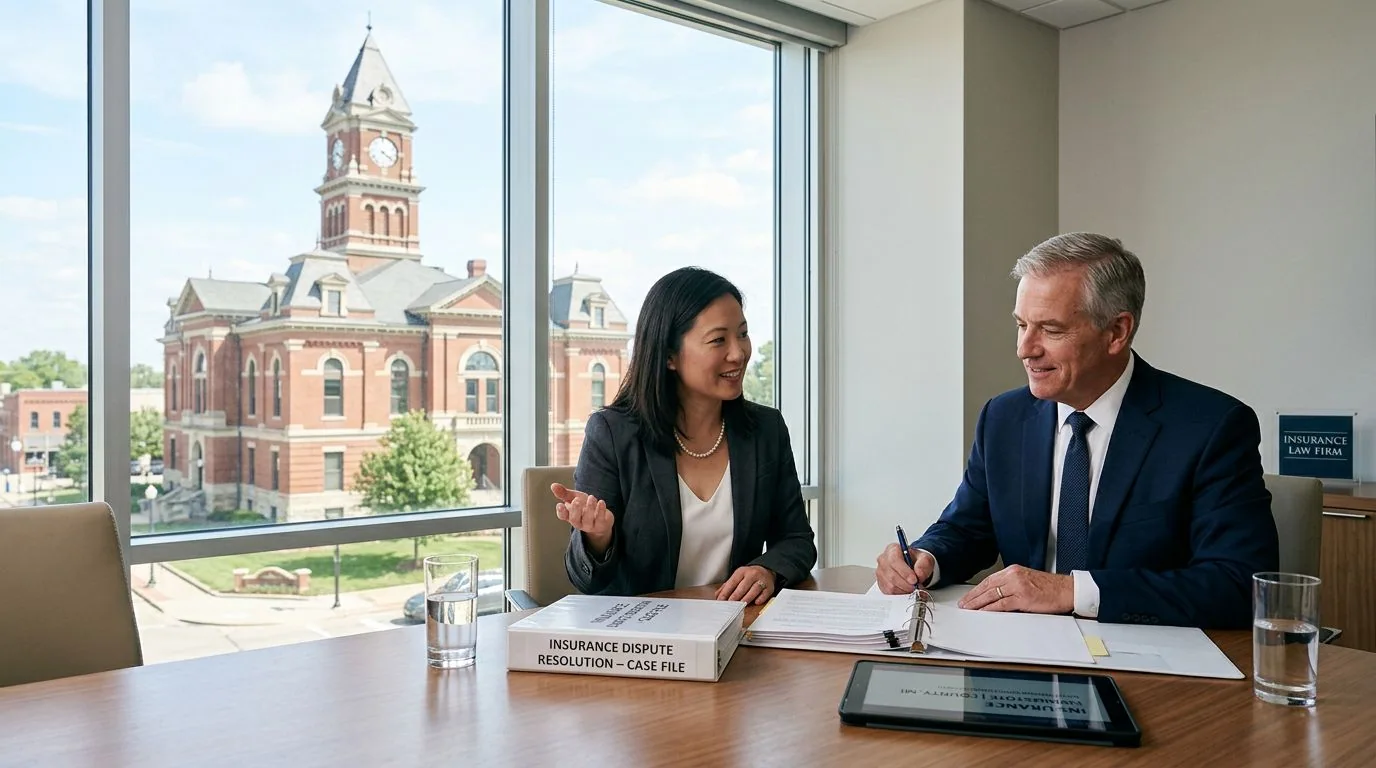
Insurance disputes in Livingston County can involve several record sources and insurance questions. Start with the incident location, available reports and any insurer correspondence. The guidance below connects those details with the evidence needed to review the particular claim.
We take cases other firms turn down, and we prepare every case for trial. Our verdicts and settlements include millions recovered for Livingston County residents whose insurers refused to pay for medical care, attendant services, and the compensation they deserved.
Common Insurance Disputes
Bring the policy, endorsements, claim number, written denial and the evidence submitted to the insurer. Track requested documents and responses by date, and distinguish policy benefits from a claim against another party.
- No-Fault PIP Benefit Denials: Your own insurance company denies coverage for medical expenses, wage loss, attendant care, or home modifications you're entitled to receive.
- Threshold Injury Disputes: Insurers argue your injuries don't meet Michigan's serious impairment threshold, blocking your third-party pain and suffering claim.
- Uninsured/Underinsured Motorist Claims: Your UM/UIM carrier refuses to cover damages when the at-fault driver had inadequate insurance.
- Bad Faith Insurance Practices: Companies delay, deny, or undervalue legitimate claims hoping you'll give up or accept pennies on the dollar.
- Coverage Interpretation Disputes: Insurers claim your policy doesn't cover your accident type or that exclusions apply when they shouldn't.
Why Insurance Companies Deny Valid Claims
Insurance companies are businesses focused on profit, not your wellbeing. They employ teams of adjusters, nurses, and lawyers whose job is to minimize payouts. Common denial tactics we encounter include:
Claiming injuries are pre-existing or unrelated. Even when medical records clearly link your injuries to the accident, insurers hire doctors who've never treated you to claim your pain comes from somewhere else.
Arguing treatment is unnecessary or excessive. Companies question your doctor's judgment, refuse to pay for procedures they deem experimental, or cut off benefits before you've fully recovered.
Misinterpreting Michigan's no-fault reforms. The 2019-2020 changes created confusion about coverage levels, fee schedules, and attendant care that insurers exploit to deny benefits.
Manufacturing coverage defenses. They'll claim you weren't covered under the policy, that you missed a notification deadline, or that policy exclusions apply when they legally don't.
Fighting No-Fault Benefit Denials
Your Personal Injury Protection coverage should pay for medical expenses, wage loss at 85% of gross income, replacement services for household tasks you can no longer perform, and attendant care if you need assistance with daily activities. When your insurer cuts off these benefits or denies your claim entirely, we file suit and prepare for trial.
Third-Party Liability Insurance Disputes
When another driver causes your injuries, you can pursue compensation beyond no-fault benefits—but only if your injuries meet Michigan's serious impairment of body function threshold. Insurance companies defending at-fault drivers deploy aggressive tactics to avoid paying these claims.
They'll argue your injuries don't objectively manifest, that they don't affect an important body function, or that you've returned to your normal life despite clear evidence otherwise. Our attorneys have extensive experience proving threshold injuries and defeating these defense strategies in Livingston County courts.
Third-party claims allow recovery for pain and suffering, excess economic damages beyond your PIP limits, loss of consortium for your spouse, and full wage loss without the 85% cap. These damages often represent the difference between financial struggle and true recovery.
Uninsured and Underinsured Motorist Coverage Battles
We've forced UM/UIM carriers throughout Michigan to honor their obligations, securing compensation when the at-fault driver fled the scene, carried only minimum liability limits, or was completely uninsured. These claims require careful navigation of policy language and Michigan insurance law—areas where our 45 years of experience make the difference.
The True Cost of Insurance Company Delays
Insurance disputes aren't just frustrating—they're financially devastating. When your insurer delays or denies benefits, you're left paying medical bills out of pocket, missing work without wage replacement, and struggling to afford the care you need to recover. Medical providers may stop treating you, creditors may pursue collection actions, and your financial security crumbles while the insurance company stalls.
We understand the urgency. That's why we move quickly to investigate your claim, demand the benefits you're owed, and file suit when necessary. Our trial-ready reputation often motivates insurers to settle fairly rather than face us in a Livingston County courtroom.
How We Resolve Insurance Disputes
Every insurance dispute requires a different approach. Some resolve through negotiation once we demonstrate the strength of your claim and our willingness to try the case. Others require litigation, discovery, depositions, and ultimately a trial before a Michigan jury.
Our process includes thoroughly reviewing your policy to identify all available coverage, gathering medical records and expert opinions that prove your injuries and treatment necessity, documenting your wage loss and economic damages, and investigating the insurer's claims file for evidence of bad faith.
Understanding Michigan Insurance Law
Michigan's insurance landscape is uniquely complex. The 2019-2020 no-fault reforms fundamentally changed coverage levels, provider fee schedules, and attendant care benefits. These changes created new opportunities for insurers to deny claims based on technical arguments and policy interpretation disputes.
Our attorneys stay current on every legislative change, appellate court decision, and regulatory update affecting Michigan insurance law.
Don't Let Your Insurance Company Win By Default
Insurance companies count on you giving up. They know most people can't afford to hire a lawyer or don't understand their rights under Michigan law. They delay, deny, and make the claims process so frustrating that you'll eventually accept whatever they offer—or nothing at all.
We level the playing field. Our contingency-fee basis means you pay nothing unless we win. We handle all communication with the insurance company, file suit when necessary, and prepare your case for trial. You focus on healing while we fight for the benefits and compensation you're owed.
Record resources and next steps
DIFS provides a consumer complaint process for insurance disputes. A regulator complaint and a legal claim are different processes; ask how any policy or court deadlines apply to your situation.
Use the Livingston County resource hub for local record routing and consultation planning, and the insurance disputes practice guide for the broader claim explanation.
Discuss your claim
Logeman & Iafrate, P.C. serves Michigan injury clients from 2950 S. State Street, Suite 400, Ann Arbor, MI 48104. Call (734) 994-0200 or request a free consultation. Describe the incident, available records and any insurer correspondence. Confirm consultation arrangements before traveling.
Our published verdicts and settlements identify the matters described there. Read the claim type and venue as stated; a result does not establish local experience in another place or predict another case’s outcome.
Frequently Asked Questions About Insurance Disputes
What should I do if my no-fault insurance company denies my claim?
Contact an experienced insurance dispute attorney immediately. You have one year from the denial to file a lawsuit for no-fault benefits under Michigan law. Reach out promptly—evidence grows stale, witnesses disappear, and insurance companies become more entrenched in their position. We'll review the denial, investigate the facts, and determine whether you have grounds to challenge the decision through litigation.
Can I sue my own insurance company?
Yes. When your own insurance company denies no-fault PIP benefits, uninsured motorist coverage, or underinsured motorist benefits you're entitled to receive, you can file a lawsuit against them. These first-party actions are common in Michigan, and we've successfully sued every major carrier operating in Livingston County to secure benefits for our clients.
How long does an insurance dispute case take to resolve?
It depends on the complexity of your case and the insurance company's willingness to negotiate fairly. Some disputes resolve within months through settlement negotiations. Others require litigation, which can take one to two years before trial. We move as quickly as possible while thoroughly preparing your case, because insurance companies often settle when they see we're truly trial-ready.
What if the insurance company says I have pre-existing conditions?
Insurance companies routinely claim injuries are pre-existing or unrelated to your accident—even when the connection is obvious. We work with your treating physicians and independent medical experts to document how the accident caused or aggravated your condition. Michigan law recognizes that accidents can worsen pre-existing conditions, and insurers remain responsible for the incremental harm their insured caused.
Do I need a lawyer for an insurance dispute, or can I handle it myself?
Bring the policy, endorsements, claim number, written denial and the evidence submitted to the insurer. Track requested documents and responses by date, and distinguish policy benefits from a claim against another party.
What damages can I recover in an insurance dispute case?
It depends on the type of dispute. For no-fault PIP benefit cases, you can recover unpaid medical expenses, wage loss, attendant care costs, replacement services, and future benefits you're entitled to receive. For third-party liability disputes, damages include pain and suffering, excess economic losses, and full compensation for all harm caused by the at-fault party. For UM/UIM claims, you can recover all damages the uninsured or underinsured driver should have paid.
Awards and Honors


We Stand with You through the Hardest Times, Advocating Vigorously for Your Rights.
At our personal injury law practice, we are prepared to handle claims involving car, truck, bus, bicycle, and pedestrian accidents; slip-and-falls and other premises liability claims; product liability claims; claims for compensation for brain and spinal cord injuries; and claims and lawsuits for wrongful death.
We help clients in Ann Arbor, Detroit and throughout Michigan recover the benefits they need and deserve. Our commitment to service is absolute. Please feel free to contact our firm at any time for advice or help with your personal injury claim.

What Our Clients Say About Us
Cases won, lives changed, and we are happy to have helped each one of our clients.


Schedule a Free Case Review with a Lawyer
Don't face this alone. Let us review your case and show you what's possible. We never charge legal fees unless we recover damages on your behalf and the initial consultation is free as well. Reach out to us today.