
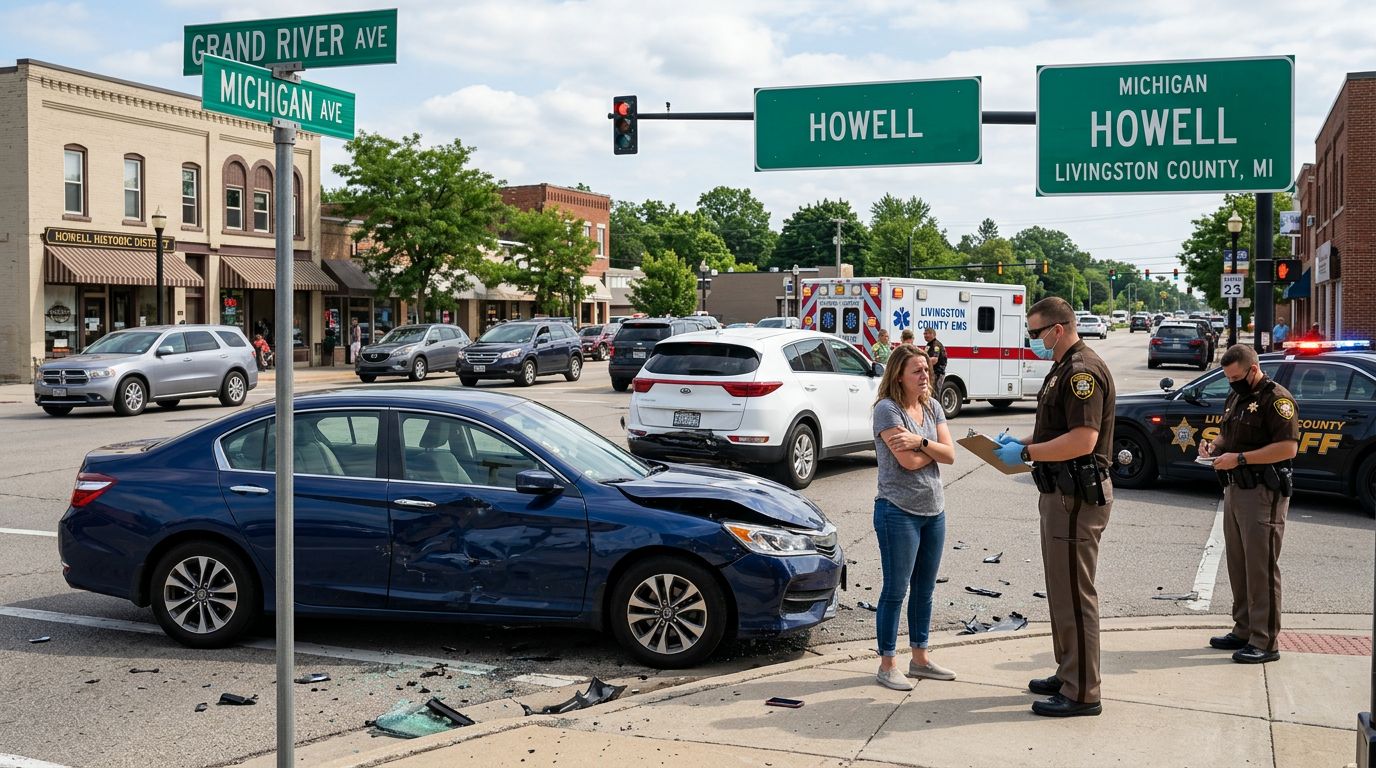
A driver looking at a phone for just five seconds at 55 mph travels the length of a football field completely blind. That split-second distraction can shatter lives—causing head-on collisions, rear-end crashes, and intersection accidents that leave victims with catastrophic injuries. At Logeman & Iafrate, P.C., our Livingston County distracted driving accident attorneys have spent over 45 years fighting for clients injured by negligent drivers who chose to text, talk, eat, or multitask instead of watching the road.
We understand the unique challenges these cases present. Distracted drivers rarely admit fault, and their insurance companies work aggressively to minimize payouts. Our trial-ready approach changes that dynamic. Insurance adjusters know we prepare every case for court and won't settle for less than full compensation.
Michigan's Distracted Driving Laws
Michigan law prohibits specific forms of distracted driving, though enforcement remains inconsistent throughout Livingston County. Understanding these statutes helps establish negligence in your case:
Texting While Driving: Michigan law bans reading, manually typing, or sending text messages while operating a vehicle. Violations carry a $100 fine for first offenses and $200 for subsequent violations. However, these modest penalties do nothing to compensate injury victims.
Handheld Phone Restrictions: While Michigan doesn't ban all handheld phone use for adult drivers, using a phone in a manner that causes a crash establishes negligence. Phone records become critical evidence in proving the driver was distracted at the moment of impact.
Level 1 and Level 2 Drivers: Drivers with learner's permits or intermediate licenses face complete bans on cell phone use while driving. Any phone use by these drivers establishes a statutory violation that supports your injury claim.
Common Forms of Driver Distraction
Distracted driving extends far beyond texting. Our Livingston County attorneys have handled cases involving every type of driver inattention:
- Manual distractions that take hands off the wheel—eating, drinking, adjusting controls, reaching for objects
- Visual distractions that take eyes off the road—looking at passengers, checking navigation systems, viewing billboards
- Cognitive distractions that take mental focus from driving—daydreaming, intense conversations, stress
- Technology distractions—social media scrolling, email checking, video watching, programming GPS
- Grooming activities—applying makeup, shaving, styling hair while driving
The most dangerous distractions combine all three types. Texting requires manual interaction, visual attention, and cognitive focus—making it one of the deadliest forms of distracted driving on Livingston County roads.
Proving Distraction Caused Your Livingston County Accident
Insurance companies aggressively defend distracted driving claims because liability is often clear once distraction is proven. Our attorneys use multiple evidence sources to establish that the at-fault driver's inattention caused your crash:
Cell Phone Records: We subpoena the driver's phone records to document calls, texts, and data usage at the time of the collision. These records provide timestamped proof of phone activity that corresponds with the crash.
Witness Statements: Passengers in the at-fault vehicle and other motorists often observe distracted behavior before the crash. We identify and interview witnesses early to preserve their accounts.
Police Reports: Officers investigating Livingston County accidents sometimes cite drivers for distracted driving or note observations about phone use, eating, or other distracting activities in their reports.
Accident Reconstruction: Expert analysis of skid marks, impact angles, and vehicle damage patterns can demonstrate that the driver failed to brake or take evasive action—consistent with complete inattention.
Admission Against Interest: Drivers sometimes admit to texting or phone use at the scene. We ensure these admissions are documented and admissible in your case.
In-Vehicle Technology: Modern vehicles record data about speed, braking, and steering inputs before crashes. We obtain this black box data to support claims of driver inattention.
Compensation Available in Livingston County Distracted Driving Cases
Distracted driving accidents often cause severe injuries because the at-fault driver never attempted to avoid the collision. Michigan law provides multiple avenues for recovery:
No-Fault PIP Benefits: Your own auto insurance provides Personal Injury Protection benefits for medical expenses, wage loss (up to 85% of gross income), and replacement services. Your coverage level—unlimited, $500,000, $250,000, or $50,000—determines the extent of these benefits.
Third-Party Liability Claims: If your injuries meet Michigan's serious impairment threshold, you can sue the distracted driver for pain and suffering, excess economic damages, and losses not covered by PIP benefits. Our attorneys have extensive experience proving threshold injuries and maximizing these recoveries.
Excess Economic Damages: When your medical expenses exceed your PIP coverage limits, the at-fault driver becomes responsible for the excess amounts.
Property Damage: Michigan allows mini-tort claims up to $3,000 for vehicle damage, or unlimited property damage claims if you carry the proper coverage or the at-fault driver was uninsured.
Why Distracted Driving Cases Require Experienced Attorneys
Insurance companies defend distracted driving claims more aggressively than other accident cases. They know distraction often establishes clear liability, making these claims more valuable. Defense tactics include:
- Arguing the driver used hands-free technology (requiring detailed phone records to refute)
- Claiming the distraction occurred before or after the collision, not during it
- Alleging you contributed to the accident by failing to avoid an inattentive driver
- Minimizing injuries by attributing them to pre-existing conditions
- Offering quick settlements before the full extent of injuries becomes apparent
Our Livingston County distracted driving attorneys know these tactics and counter them effectively. We gather evidence immediately, retain experts early, and build cases strong enough to achieve full compensation through settlement or trial verdict.
Livingston County Roads and Distracted Driving Risks
Certain Livingston County locations see higher rates of distracted driving accidents due to traffic patterns and driver behavior:
I-96 Corridor: This major highway sees frequent rear-end collisions when distracted drivers fail to notice slowing traffic, particularly near the US-23 interchange and the Howell area exits.
Grand River Avenue: This busy commercial corridor through Brighton and Howell creates multiple distraction opportunities with frequent stops, turning traffic, and visual clutter from businesses.
US-23: Heavy commuter traffic combined with high speeds makes distraction particularly dangerous on this north-south route through the county.
School Zones: Distracted drivers pose extreme risks near Livingston County schools during morning and afternoon hours when children are present.
Regardless of where your Livingston County distracted driving accident occurred, our attorneys investigate thoroughly to establish liability and pursue maximum compensation.
We Take Cases Others Won't—And Win Cases Others Can't
Our reputation for trial preparation means insurance companies approach Livingston County cases differently when they see our firm's name. They know we won't back down from litigation when they refuse fair settlement offers. That trial-ready approach has produced substantial verdicts and settlements for distracted driving victims throughout Michigan.
We operate on a contingency-fee basis. You pay nothing unless we recover compensation for you. During your free consultation, we'll evaluate your Livingston County distracted driving accident, explain your legal options, and outline the compensation you deserve.
Contact Our Livingston County Distracted Driving Accident Attorneys
If you or a loved one suffered injuries in a Livingston County distracted driving accident, contact Logeman & Iafrate, P.C. today. Our experienced attorneys provide free consultations and handle cases on a contingency-fee basis—we don't get paid unless we win your case.
Call us at (734) 994-0200 or fill out our online contact form to schedule your free consultation. Let us fight by your side to hold distracted drivers accountable and recover the compensation you need to rebuild your life.
Frequently Asked Questions About Livingston County Distracted Driving Accidents
What should I do immediately after being hit by a distracted driver in Livingston County?
Call 911 to report the accident and request medical assistance, even if injuries seem minor. Document the scene with photos showing vehicle positions, damage, road conditions, and any visible evidence of distraction (phone in hand, food, etc.). Collect witness information from anyone who observed the other driver's behavior before the crash. Report the accident to your insurance company within one year to preserve PIP benefits, but avoid giving recorded statements to the other driver's insurer without legal counsel. Contact an experienced attorney as soon as possible to begin investigating while evidence is fresh.
How do you prove the other driver was distracted at the time of my Livingston County accident?
We gather multiple forms of evidence to establish distraction. Phone records subpoenaed from the driver's carrier show calls, texts, and data usage timestamped to the moment of impact. Witness statements from passengers or other motorists often confirm observations of phone use, eating, or other distracting activities. Police reports may document officer observations or citations for distracted driving. Accident reconstruction analysis can demonstrate the driver failed to brake or steer defensively—consistent with complete inattention. In-vehicle data recorders capture speed, braking, and steering inputs before the crash. Our attorneys act quickly to secure this evidence before it disappears.
Can I recover compensation if the distracted driver received no ticket at the scene?
Absolutely. The absence of a traffic citation doesn't prevent recovery. Many distracted driving violations go uncited at accident scenes, particularly if officers don't witness the behavior directly or if the driver conceals their phone before police arrive. Civil liability standards differ from criminal citations—we prove negligence through evidence gathering, witness testimony, and expert analysis regardless of whether law enforcement issued a ticket. Our Livingston County attorneys have secured substantial compensation in cases where no citation was issued.
What is Michigan's serious impairment threshold and how does it affect my distracted driving case?
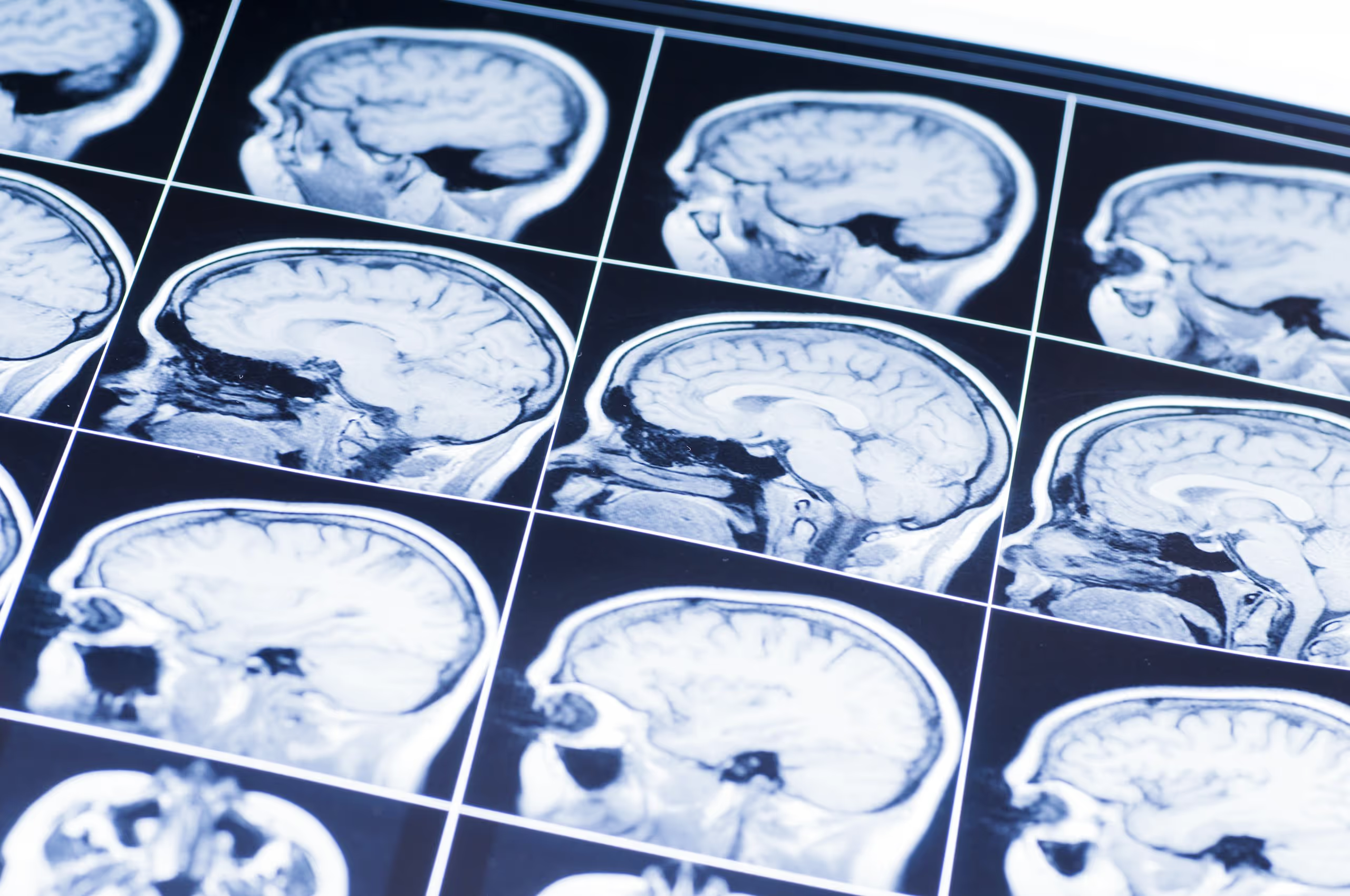
Michigan law requires your injuries to meet the "serious impairment of body function" threshold before you can sue the at-fault driver for pain and suffering. This means an objectively manifested impairment of an important body function that affects your general ability to lead your normal life. Distracted driving accidents often cause threshold injuries including fractures, torn ligaments, herniated discs, concussions, and soft tissue damage requiring surgery. Our attorneys document how your injuries impact daily activities, work capabilities, and quality of life to prove you meet this threshold and maximize your third-party recovery.
How long do I have to file a lawsuit after a Livingston County distracted driving accident?
Michigan's statute of limitations for personal injury claims is generally three years from the accident date. However, certain circumstances can shorten or extend this deadline. No-fault PIP benefits require filing within one year of the accident or one year from when benefits were improperly denied. Property damage claims under the mini-tort statute must be filed within three years. Consulting an experienced Livingston County attorney promptly ensures all deadlines are met and evidence is preserved while memories remain fresh. Waiting too long can result in losing your right to compensation entirely.
Awards and Honors



.svg)