Third-Party Liability Claims in Jackson County, MI
Organize the evidence and coverage questions for third-party liability in Jackson County. Free case review through our Ann Arbor office.
What this claim guide covers
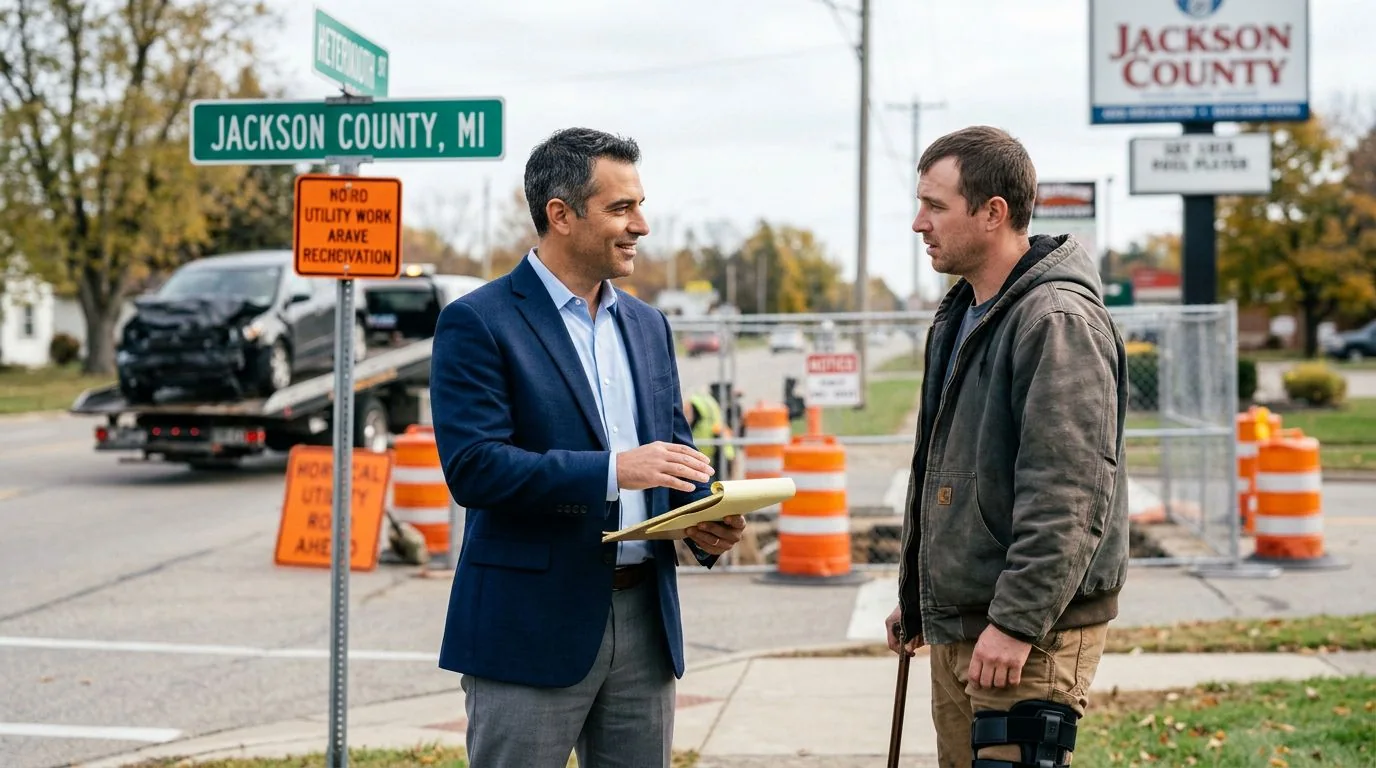
This guide focuses on identifying a responsible person or business and pursuing a claim against that party. It addresses who may be liable, rather than only the benefits available from your own insurer.
Related questions for Jackson County residents: Economic damages, Personal injury litigation, Non-economic damages.
For an overview of the injuries we handle and how to contact our Ann Arbor office, visit our Jackson County service-area page.
Most injury cases in Jackson County start with insurance claims—no-fault benefits after auto accidents or workers' compensation for job injuries. But insurance benefits only go so far. They pay medical bills and partial wage loss, but they don't compensate you for pain, suffering, or the full financial impact of serious injuries.
When someone other than your employer or your own insurer causes your injury, Michigan law gives you the right to file a third-party liability claim. These claims pursue the negligent party directly, recovering damages that insurance won't cover. At Logeman & Iafrate, P.C., we've spent more than 45 years building third-party cases that hold wrongdoers accountable and pursue the full value of our clients' recovery across Jackson County and throughout Michigan.
What Is a Third-Party Liability Claim?
A third-party claim targets someone other than the parties involved in your insurance relationship. Common examples throughout Jackson County include:
- Auto accident claims against at-fault drivers. Michigan's no-fault system pays your medical bills and partial wage loss through your own insurer, but if your injuries meet the serious impairment threshold, you can sue the negligent driver for pain and suffering, full wage loss, and excess damages.
- Construction site claims against general contractors, subcontractors, or property owners. Workers' comp covers your medical care and partial wages, but when unsafe conditions created by contractors or owners cause your injury, third-party claims recover additional compensation.
- Premises liability claims for injuries on someone else's property. When dangerous conditions at businesses, apartment complexes, or private properties cause falls or other injuries, property owners can be held liable beyond any insurance coverage you receive.
- Product liability claims against manufacturers. If defective equipment, tools, or products cause injury at work or elsewhere, manufacturers face liability separate from workers' compensation or other insurance benefits.
Why Third-Party Claims Matter
Third-party liability claims fill critical gaps left by insurance coverage. They provide:
- Compensation for pain and suffering. Neither workers' compensation nor no-fault benefits compensate you for physical pain, emotional distress, or reduced quality of life. Third-party claims do.
- Full wage loss recovery. Workers' comp typically pays 80% of after-tax wages. No-fault benefits cap at 85% of gross income. Third-party claims recover 100% of lost earnings, including future income if injuries affect your long-term earning capacity.
- Accountability for negligence. Insurance systems pay benefits regardless of fault. Third-party claims hold negligent parties responsible, creating incentives for safer behavior.
- Recovery for excess medical costs. When injuries require care beyond insurance limits, third-party claims bridge the gap.
Common Third-Party Liability Cases We Handle
Our attorneys represent Jackson County clients in third-party claims arising from:
Auto Accidents
When another driver causes a crash in Jackson County, your no-fault benefits cover immediate medical expenses and partial wage loss. But if your injuries meet Michigan's serious impairment of body function threshold—an objectively manifested impairment of an important body function that affects your general ability to lead your normal life—you can pursue a third-party claim against the at-fault driver for full damages.
Construction Site Accidents
Jackson County construction workers injured on the job typically receive workers' compensation benefits from their employer. But when general contractors, subcontractors, or property owners create unsafe conditions in common work areas, they face third-party liability. We pursue these claims to recover damages workers' comp doesn't provide.
Truck Accidents
Commercial trucking accidents often involve multiple liable parties beyond the driver—trucking companies, cargo loaders, maintenance contractors, and manufacturers. We investigate every potential source of recovery to pursue full compensation for Jackson County victims of semi-truck crashes.
Premises Liability
Property owners throughout Jackson County have a duty to maintain reasonably safe conditions. When they fail—through negligent maintenance, inadequate security, or dangerous conditions—and injuries result, third-party claims hold them accountable.
Defective Products
Manufacturers face strict liability when defective products cause injuries. Whether the defect involves design flaws, manufacturing errors, or inadequate warnings, we pursue compensation from every party in the distribution chain.
Proving Third-Party Liability
Successful third-party claims require proving:
- Duty. The third party owed you a duty of reasonable care—drivers must follow traffic laws, property owners must maintain safe premises, manufacturers must design safe products.
- Breach. The third party violated that duty through negligence, recklessness, or intentional conduct.
- Causation. The breach directly caused your injuries.
- Damages. You suffered measurable harm—medical expenses, lost income, pain and suffering, permanent disability.
We work with accident reconstructionists, medical experts, economic analysts, and other specialists to build compelling evidence on every element.
How Third-Party Claims Work Alongside Insurance Benefits
Third-party claims don't replace insurance benefits—they supplement them. You continue receiving no-fault or workers' compensation benefits while pursuing your third-party case. However, insurers may claim reimbursement rights (subrogation) from your third-party recovery. We negotiate these liens to pursue the full value of what you keep.
Time Limits Third-Party Claims
Michigan's statute of limitations generally gives you three years to file third-party personal injury lawsuits. However, specific circumstances can shorten or extend these deadlines. Claims against government entities require notice within specific timeframes—often as short as 120 days. Starting early preserves evidence, protects your rights, and strengthens your case.
Preparing the evidence for your claim
Identify each person or organization involved and the conduct attributed to them. Keep contracts, employer details and equipment ownership information when relevant; benefits from one source do not identify every potential liability claim.
Record resources and next steps
If court proceedings already exist, Jackson County Court Services can help identify the relevant court record. It does not determine where a new claim should be filed.
Use the Jackson County resource hub for local record routing and consultation planning, and the third-party liability practice guide for the broader claim explanation.
Discuss your claim
Logeman & Iafrate, P.C. serves Michigan injury clients from 2950 S. State Street, Suite 400, Ann Arbor, MI 48104. Call (734) 994-0200 or request a free consultation. Describe the incident, available records and any insurer correspondence. Confirm consultation arrangements before traveling.
Our published verdicts and settlements identify the matters described there. Read the claim type and venue as stated; a result does not establish local experience in another place or predict another case’s outcome.
Frequently Asked Questions About Third-Party Liability Claims
What's the difference between a third-party claim and an insurance claim?
Insurance claims (no-fault auto benefits or workers' compensation) pay benefits from your own or your employer's insurance regardless of fault. Third-party liability claims pursue the negligent party directly for damages insurance doesn't cover—including pain and suffering, full wage loss, and excess medical costs. You can pursue both simultaneously.
Can I file a third-party claim if I'm already receiving workers' compensation?
Yes. Workers' compensation is your exclusive remedy against your employer, but you can sue third parties whose negligence contributed to your injury—general contractors, subcontractors, property owners, equipment manufacturers, or other negligent parties. These claims provide compensation beyond workers' comp benefits.
Do I need to prove the serious impairment threshold for auto accident third-party claims?
Yes. Michigan law requires your injuries meet the serious impairment of body function threshold to pursue pain and suffering damages against at-fault drivers. This means an objectively manifested impairment of an important body function that affects your general ability to lead your normal life. Our attorneys have extensive experience proving threshold injuries.
How long do I have to file a third-party claim?
Michigan's statute of limitations is generally three years from the date of injury for personal injury claims. However, claims against government entities require notice within much shorter timeframes—often 120 days. Product liability claims may have different deadlines. Starting early preserves evidence and protects your rights.
Will my workers' comp or no-fault insurer take part of my third-party settlement?
Possibly. Insurers often assert subrogation or reimbursement rights to recover benefits they paid from your third-party recovery. However, Michigan law limits these claims, and we negotiate liens to pursue the full value of what you keep. Our goal is to ensure the full value of your third-party recovery benefits you.
What damages can I recover in a third-party liability claim?
Third-party claims recover damages insurance won't cover, including pain and suffering, full wage loss (not the reduced percentage insurance pays), loss of future earning capacity, excess medical expenses beyond insurance limits, permanent disability and disfigurement, and loss of enjoyment of life. Economic damages like medical bills and lost wages are not capped in most cases.
Awards and Honors


We Stand with You through the Hardest Times, Advocating Vigorously for Your Rights.
At our personal injury law practice, we are prepared to handle claims involving car, truck, bus, bicycle, and pedestrian accidents; slip-and-falls and other premises liability claims; product liability claims; claims for compensation for brain and spinal cord injuries; and claims and lawsuits for wrongful death.
We help clients in Ann Arbor, Detroit and throughout Michigan recover the benefits they need and deserve. Our commitment to service is absolute. Please feel free to contact our firm at any time for advice or help with your personal injury claim.

What Our Clients Say About Us
Cases won, lives changed, and we are happy to have helped each one of our clients.


Schedule a Free Case Review with a Lawyer
Don't face this alone. Let us review your case and show you what's possible. We never charge legal fees unless we recover damages on your behalf and the initial consultation is free as well. Reach out to us today.