
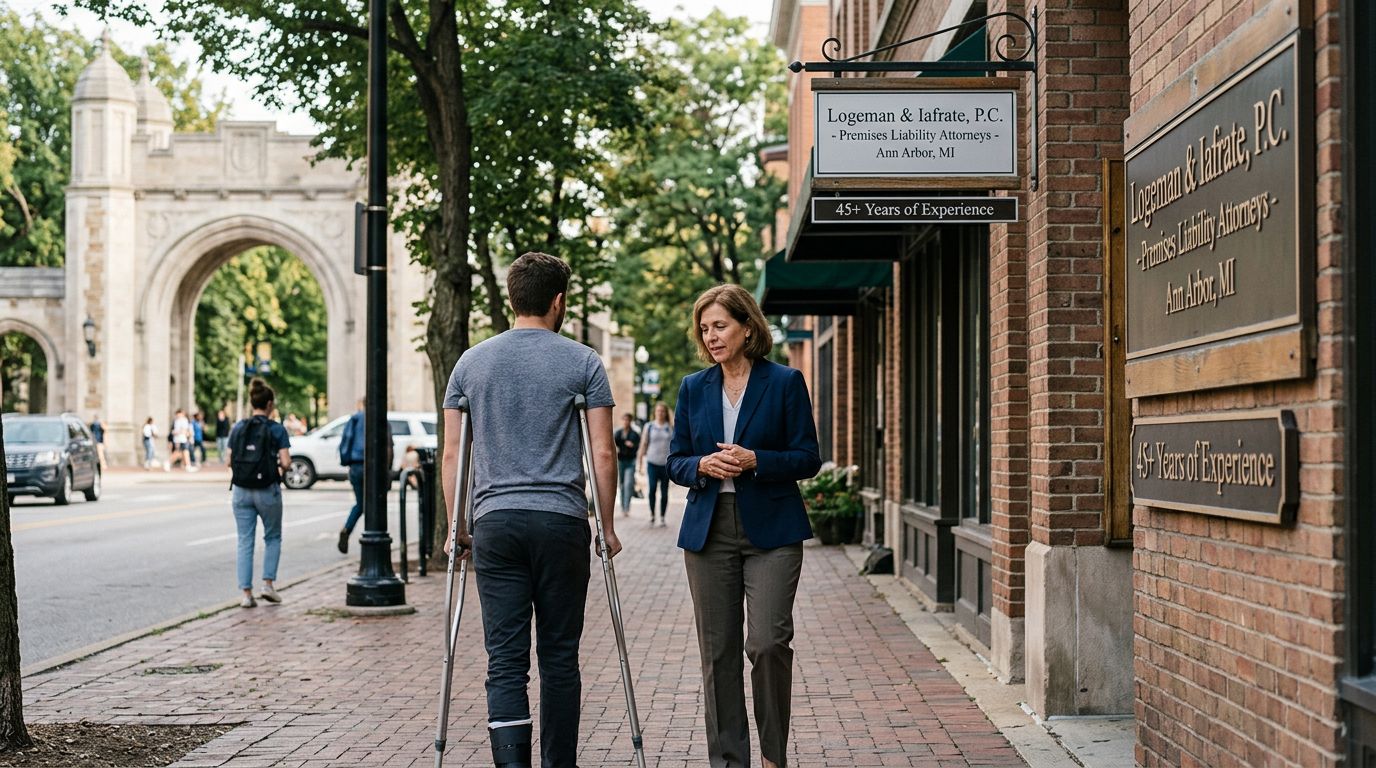
When you're injured on someone else's property due to unsafe conditions, your life changes in an instant. You face mounting medical bills, time away from work, and pain that affects every aspect of your daily routine. Property owners in Ann Arbor have a legal responsibility to maintain safe premises—and when they fail, injured people deserve justice.
At Logeman & Iafrate, P.C., we've spent more than 45 years fighting for accident victims throughout Michigan. We understand Michigan's complex premises liability laws and know how to prove that property owners failed in their duty to keep you safe. We take cases others won't, and we prepare every case for trial.
What Is Premises Liability Under Michigan Law?
A premises liability case arises when an injury results from an unsafe or defective condition on another person's property. Michigan law requires property owners and businesses to maintain their premises in a safe condition for lawful visitors. When dangerous conditions exist, owners may be liable for injuries suffered by guests, customers, and others lawfully present.
Property owners must exercise reasonable care to prevent foreseeable accidents. This includes maintaining the property in a reasonably safe condition and warning of potentially dangerous conditions not readily observable to a prudent person. The duty exists regardless of whether the property is public or private, commercial or residential.
However, property owners are not insurers of visitor safety. Michigan law provides defenses, particularly the open and obvious doctrine, which can limit liability when dangers are readily apparent upon casual inspection.
Common Types of Premises Liability Cases in Ann Arbor
Our Ann Arbor premises liability attorneys handle a wide range of property-related injury claims:
- Slip and fall accidents on icy sidewalks, wet floors, or uneven surfaces
- Snow and ice injuries from inadequate snow removal or dangerous accumulation
- Inadequate security leading to assaults, attacks, or criminal injuries
- Defective property conditions including broken stairs, loose railings, or structural failures
- Falling merchandise at retail stores and warehouses
- Inadequate lighting in parking lots, stairwells, or walkways
- Swimming pool accidents and drowning incidents
- Dog bites and animal attacks on residential or commercial property
- Toxic exposure from mold, chemicals, or environmental hazards
- Elevator and escalator accidents
- Construction site hazards affecting lawful visitors
- Apartment complex injuries from failure to maintain common areas
Understanding the Open and Obvious Doctrine
Michigan's open and obvious doctrine creates a significant hurdle for premises liability claims. Property owners can avoid liability if the dangerous condition that caused injury was "open and obvious"—meaning an average person with ordinary intelligence would have discovered the danger upon casual inspection.
However, this defense isn't absolute. Property owners still have a duty to exercise reasonable care to diminish known hazards, even obvious ones, when:
- The hazard is effectively unavoidable. When visitors have no reasonable choice but to confront the danger, owners remain liable. An example is a completely ice-covered parking lot with no alternative safe path.
- The condition is unreasonably dangerous. Even when obvious, some hazards present such a high likelihood of serious injury that they remain the property owner's responsibility. Courts have found liability for unguarded 20-foot holes and similar extreme dangers.
- Special circumstances exist. Distraction, emergency situations, or circumstances that draw attention away from hazards can overcome the open and obvious defense.
Our attorneys know how to counter open and obvious arguments by demonstrating unavoidable hazards, unreasonable dangers, and special circumstances that kept you from avoiding injury.
What Must You Prove in an Ann Arbor Premises Liability Case?
To recover compensation after a premises liability injury in Michigan, you must establish several elements:
- Lawful presence. You were on the property lawfully as an invitee, licensee, or in some circumstances, as a trespasser with specific protections.
- Dangerous condition. An unsafe or defective condition existed on the property.
- Owner knowledge. The property owner knew or should have known about the dangerous condition.
- Failure to remedy or warn. The owner failed to fix the condition or provide adequate warning.
- Causation. The dangerous condition directly caused your injuries.
- Damages. You suffered actual injuries and losses requiring compensation.
The property owner has a duty to maintain premises in a reasonably safe condition considering the likelihood of injury, the seriousness of potential harm, and the burden of correcting the defect. Our attorneys gather evidence, work with experts, and build comprehensive proof of each element to pursue the full compensation you're owed.
Common Injuries in Ann Arbor Premises Liability Cases
Unsafe property conditions cause serious injuries that can affect victims for years:
- Traumatic brain injuries and concussions from falls on hard surfaces
- Spinal cord injuries resulting in paralysis or chronic pain
- Broken bones and fractures requiring surgery and extended recovery
- Hip fractures particularly devastating for elderly victims
- Herniated and ruptured discs causing chronic back and neck pain
- Torn ligaments and soft tissue injuries affecting mobility and function
- Severe lacerations requiring stitches or reconstructive surgery
- Shoulder injuries from catching yourself during a fall
- Knee injuries including torn meniscus and ligament damage
- Wrist and arm fractures from bracing during falls
These injuries require extensive medical treatment, physical therapy, and time away from work. The experienced attorneys at Logeman & Iafrate fight to secure compensation for all injury-related expenses and losses.
Compensation Available in Ann Arbor Premises Liability Cases
When property owners fail in their duty to maintain safe premises, Michigan law allows injured victims to recover:
- Medical expenses including emergency care, hospitalization, surgery, medication, and ongoing treatment
- Future medical costs for continued care, physical therapy, and potential additional procedures
- Lost wages for time missed from work during recovery
- Loss of earning capacity if injuries prevent you from returning to your previous employment
- Pain and suffering for physical discomfort and emotional distress
- Permanent disability or disfigurement when injuries cause lasting impairment
- Loss of enjoyment of life when injuries prevent activities you previously enjoyed
- Out-of-pocket expenses for travel to medical appointments, assistive devices, and home modifications
Every case is different. The seasoned attorneys at Logeman & Iafrate evaluate your specific situation, work with medical and economic experts to calculate full damages, and fight to pursue the full compensation you're owed.
Why Choose Logeman & Iafrate for Your Ann Arbor Premises Liability Case?
Premises liability cases require detailed knowledge of Michigan law, thorough investigation, and the willingness to take cases to trial. Our firm brings all three:
- More than 45 years of experience representing injured clients throughout Michigan
- Trial-ready approach that insurance companies respect and fear
- record of verdicts and settlements of verdicts and settlements for premises liability victims
- Thorough investigation including scene documentation, witness interviews, and expert analysis
- Deep understanding of the open and obvious doctrine and effective strategies to overcome it
- Free consultation to evaluate your case with no obligation
- Contingency-fee basis meaning we don't get paid unless we win your case
We take cases other firms turn down and prepare every case for trial. When property owners and their insurance companies see our name on a case, they know we're prepared to go the distance.
Take Action After a Premises Liability Injury in Ann Arbor
If you've been injured on someone else's property, taking prompt action protects your rights and strengthens your claim:
- Seek immediate medical attention even if injuries seem minor at first
- Report the incident to the property owner or manager and request written documentation
- Document the scene with photos showing the dangerous condition, poor lighting, lack of warnings, or other hazards
- Identify witnesses and obtain their contact information
- Preserve evidence including clothing and shoes worn during the incident
- Keep detailed records of all medical treatment, expenses, and time missed from work
- Avoid giving recorded statements to property owners' insurance companies without legal representation
- Contact an experienced attorney as soon as possible to preserve evidence and protect your rights
Michigan's statute of limitations generally provides three years to file a premises liability lawsuit, but waiting reduces your ability to gather evidence and can weaken your case.
Past results do not guarantee future outcomes. Each case is decided on its own facts.
Contact Our Ann Arbor Premises Liability Attorneys Today
You deserve compensation when negligent property owners fail to keep their premises safe. At Logeman & Iafrate, P.C., we provide trial-ready representation during the most challenging times of your life. We'll handle the legal complexities while you focus on healing and recovery.
Call us at (734) 994-0200 or fill out our online contact form to schedule a free consultation. We serve clients throughout Ann Arbor and across Michigan, and we handle all premises liability cases on a contingency-fee basis. You pay nothing unless we win your case.
Let us fight by your side and help you rebuild your life after a preventable property injury.
Frequently Asked Questions About Premises Liability in Ann Arbor
What is premises liability under Michigan law?
Premises liability arises when an injury results from an unsafe or defective condition on another person's property. Michigan law requires property owners and businesses to maintain premises in a reasonably safe condition and warn of potentially dangerous conditions not readily observable. The owner's duty exists regardless of whether property is public or private, but they are not insurers of visitor safety and may avoid liability for open and obvious dangers.
What does "open and obvious" mean in a Michigan premises liability case?
A danger is open and obvious if an average person with ordinary intelligence would discover it upon casual inspection. Property owners can avoid liability for open and obvious dangers unless the hazard is effectively unavoidable (you have no choice but to confront it) or unreasonably dangerous (high likelihood of serious injury despite being obvious). Our attorneys know how to overcome this defense by demonstrating these exceptions apply to your case.
How long do I have to file a premises liability lawsuit in Ann Arbor?
Michigan's statute of limitations for premises liability cases is generally three years from the date of injury. However, waiting to file reduces your ability to gather evidence, locate witnesses, and preserve documentation of the dangerous condition. Property owners often repair hazards after accidents, destroying crucial evidence. Consulting an attorney immediately after your injury protects your rights and strengthens your claim.
Can I recover compensation if I was partially at fault for my premises liability injury?
Michigan follows a modified comparative negligence rule. You can recover compensation if you were less than 50% at fault for your injury, but your recovery is reduced by your percentage of fault. For example, if you're found 20% at fault and awarded $100,000, you receive $80,000. Property owners often argue comparative fault to reduce their liability, making experienced legal representation essential to protect your full recovery.
What types of property defects can lead to premises liability claims in Ann Arbor?
Common dangerous conditions include slip and fall hazards from ice, snow, water, or debris; defective stairs, railings, or flooring; inadequate lighting in parking lots or stairwells; falling merchandise at stores; swimming pool hazards; elevator or escalator malfunctions; inadequate security leading to assaults; structural failures; toxic exposures; and dog bites. Any unsafe condition the owner knew or should have known about can support a claim if it causes injury.
Do I need to prove the property owner knew about the dangerous condition?
Yes. You must show the property owner knew or should have known about the hazard. Actual knowledge exists when the owner was directly aware of the condition. Constructive knowledge applies when the condition existed long enough that reasonable inspection would have discovered it. Evidence like maintenance records, prior complaints, surveillance footage, and witness testimony helps prove owner knowledge.
What compensation can I recover in an Ann Arbor premises liability case?
You may recover medical expenses for all past and future treatment, lost wages and reduced earning capacity, pain and suffering, permanent disability or disfigurement, loss of enjoyment of life, and out-of-pocket expenses. The value depends on injury severity, degree of permanent impairment, treatment duration, and impact on your daily life. Our attorneys work with medical and economic experts to calculate full damages and fight for full compensation.
How is premises liability different from a personal injury claim?
Premises liability is a type of personal injury claim specifically involving injuries caused by unsafe property conditions. While auto accident cases focus on driver negligence and medical malpractice involves healthcare provider errors, premises liability centers on property owner duties to maintain safe conditions and warn of hazards. Each claim type has unique legal standards, defenses, and proof requirements requiring specialized legal knowledge.
Awards and Honors





.svg)