
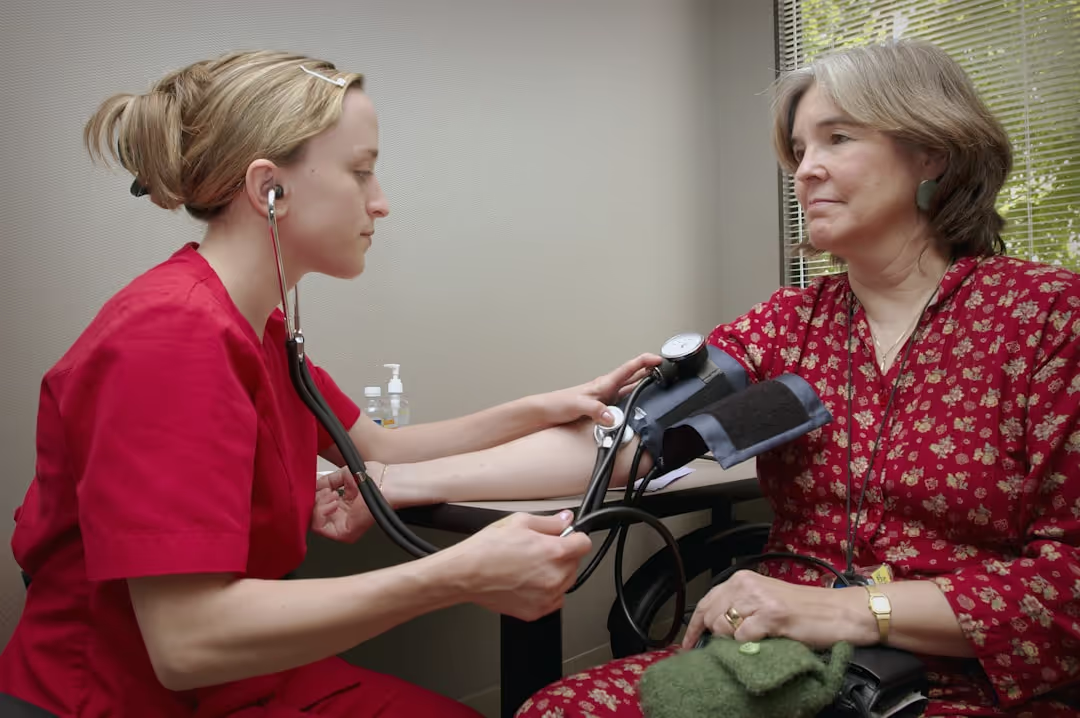
Insurance companies and defense attorneys utilize so-called independent medical evaluations to contest the need for medical treatment and disability benefits arising from car accidents. Insurance adjusters will frequently deny claims or benefits based on the results of the independent medical evaluations.
Insurance companies have the right to conduct these evaluations under the contract language of auto policies and statutes. The 2019 amendment to the Michigan No-Fault Law has changed who can perform these evaluations at the request of insurance companies. The evaluators must satisfy certain qualification requirements before being allowed to conduct these exams.
These new rules do not apply to auto negligence cases; however, insurance companies will frequently rely on these exams when defending bodily injury cases.
Who Can Perform the Examination?
The statute states that the person shall submit to a "mental or physical exam by physicians." The question has been raised as to whether an insurer can compel an examination by a non-physician. This would include an exam by a neuropsychologist, occupational therapist, vocational rehabilitation, nurse, and other non-physician professionals. Under the literal language of the statute, the statute would appear to limit evaluations to physicians.
This office has taken the legal position that such non-physician evaluations are not allowed under the amended no-fault law. See MCL 500.3151. As of this date, our law firm has successfully prevented an insurer from utilizing non-physician exams in court and in cases before a lawsuit has been filed.
If a no-fault claim was actively in litigation, an insurer could attempt to utilize MCR 2.311 to compel attendance at a non-physician evaluation using a good cause argument. If a plaintiff was utilizing a non-physician in support of benefits, an insurer could argue that good cause was satisfied under these unique circumstances. MCR 2.311 references physical or mental examinations by a physician or "other appropriate professional."
However, this argument would appear to be inconsistent with the legal decision of Muci v. State Farm Mut. Auto. Ins. Co., 267 Mich App 431 (2005), which stated that the No-Fault Act comprehensively addresses the matter of claimant examinations under the provisions of MCL 3142, 3148, 3153, and 3159 and therefore the statute and not the court rule should determine the issue of whether non-physicians can conduct an IME. This supports our position that non-physician evaluations are not allowed under the new law.
Litigation Practice Concerning IMEs
There will be increased discovery regarding whether an IME satisfies the qualification requirements of MCL 500.3151. By the time an insurance defense lawyer has received a case, the adjuster has likely already utilized an IME to deny benefits.
A claimant's attorney should conduct discovery regarding whether the IME satisfies the qualification requirements. The claimant's attorney may conduct a duces tecum discovery only deposition to further investigate the witnesses' qualifications. See MCR 2.302(B)(4)(a)(ii) and 2.302(C)(7). The claimant's attorney should attempt to obtain the examining physician's financial records, which would appear relevant to issues of bias and time spent conducting independent medical evaluations.
Courts are reluctant to require an examiner to turn over tax returns since this would have a chilling effect on physicians' willingness to be involved as an IME. The medical malpractice statute concerning IMEs specifically prohibits discovery of tax returns. See MCL 600.2169(5)(a).
However, there is no reason why counsel for the injured party could not subpoena records from IME vendor services documenting the time spent conducting IMEs as should be seen in appointment calendars. Vendors also will issue 1099s to the IME physicians, which should be discoverable. The undersigned has observed that some no-fault insurers are continuing to utilize IMEs that likely do not satisfy the new qualification requirements or do not possess the necessary certifications based on previous testimony despite the amendment to MCL 500.3151.
Conclusion
There normally is not a good reason to voluntarily attend a non-physician exam that does not comply with the amended rules. An injured party should make sure that the evaluator complies with the new rules regarding independent medical evaluations. Insurance companies have historically used these exams to manage and deny claims, and hopefully these new rules will make it more difficult for insurance companies to deny valid claims which cause harm to accident victims and their families.
Logeman, Iafrate & Logeman, P.C. has been helping clients throughout Michigan recover full and fair compensation for their economic losses, pain, and suffering. If you would like to discuss a personal injury claim with one of our lawyers, or have any questions about an accident claim, contact our Ann Arbor Personal Injury Law Firm for a free consultation.
Frequently Asked Questions
What is an Independent Medical Evaluation (IME)?
An independent medical evaluation is an examination conducted by a physician selected by an insurance company to assess your injuries, medical treatment needs, and disability status following a car accident. Insurance companies use IMEs to contest claims for medical treatment and disability benefits.
Who can perform an IME under Michigan's 2019 No-Fault Law amendments?
Under the amended MCL 500.3151, only physicians can perform independent medical evaluations. The statute specifically states "mental or physical exam by physicians," which means non-physician professionals such as neuropsychologists, occupational therapists, or nurses cannot conduct these evaluations under the no-fault law.
Can insurance companies require me to attend a non-physician evaluation?
Under the amended no-fault law, there is no good reason to voluntarily attend a non-physician exam. Our law firm has successfully prevented insurers from utilizing non-physician exams both in court and before lawsuits are filed. The statute limits evaluations to physicians only.
What qualification requirements must IME physicians meet?
The 2019 amendment to Michigan's No-Fault Law established specific qualification requirements that evaluators must satisfy before conducting these exams. Your attorney should conduct discovery to verify whether the IME physician meets these qualification requirements under MCL 500.3151.
How can I challenge an IME that doesn't comply with the new rules?
Your attorney can conduct discovery regarding whether the IME satisfies qualification requirements, including duces tecum depositions to investigate the examiner's qualifications. Your lawyer may also seek financial records from IME vendor services to document time spent conducting evaluations and investigate potential bias.
Do the new IME rules apply to auto negligence cases?
No, these new rules do not apply to auto negligence cases. However, insurance companies frequently rely on these exams when defending bodily injury cases, so understanding the rules remains important for protecting your rights.
Awards and Honors







.svg)