
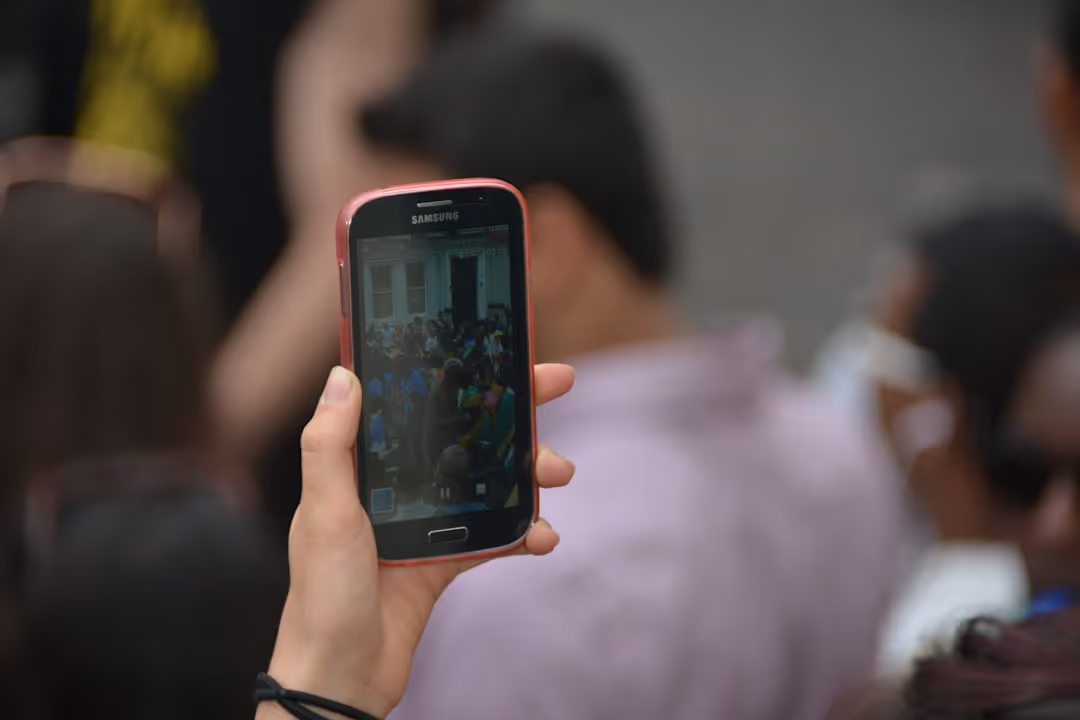
If you are involved in a car accident in Michigan, you should use your phone camera to take photos after you have used it to call 9-1-1 or contacted the local police agency. The pictures you take at the accident scene can later help provide proof as to what occurred in the accident. Photographs will be helpful if you later choose to pursue compensation for your injuries or when establishing property damage claims. If you are unable to take photographs due to your injuries, you should have friends or family members take photographs as soon as possible.
Photographs of the Accident Scene Can Be an Important Step Toward Documenting Scene Evidence That Will Be Helpful to Prove Fault
Photographs should be taken to show the position of cars, the point of impact, and relevant traffic signs, vehicle damage, and road conditions. This evidence can also help demonstrate the extent of the damage done to your car during the crash and that those damages occurred during the actual collision and not at some other unrelated time.
Even if you are at fault for the accident, you should take photographs. These photos could document the actual damage to the involved vehicles so that you will not be held responsible for property damage you did not cause.
You should also take photographs of your injuries. Photos can help you prove that the injuries you are suffering from occurred during the crash and can be used if the insurance company claims that the injuries were pre-existing or unrelated to the collision.
Further, you should also obtain the following accident information:
- Any witnesses and their names and contact information
- The license plate and insurance information of the other parties involved in the collision
- Make sure to inform the investigating police officer that you are injured if you feel pain even if you think the injuries are minor. The police officer should document this in the police report. Otherwise, if the officer indicates that you are not injured, the insurance company may later use this as a reason to deny your personal injury claim.
In Michigan, police use the following injury codes:
K – Fatal Injury
Any injury which results in death.
A – Incapacitating Injury
Any injury other than fatal which prevents normal activities and generally requires hospitalization.
B – Non-Incapacitating Injury
Any injury not incapacitating but evident to others at the scene.
C – Possible Injury
No visible injury but complaint of pain or momentary unconsciousness.
O – No Injury
No indication of injury.
In summary, you should take pictures of anything and everything that might be relevant to your claim. There is no such thing as taking too many pictures, and in some cases, even photographs that initially seem unnecessary may end up providing the most important information.
Our personal injury attorneys in Ann Arbor can help you today. Call now and speak with an experienced attorney for your Free Case Evaluation.
Frequently Asked Questions
What should I photograph at a car accident scene in Michigan?
You should photograph the position of all vehicles, the point of impact, visible damage to all vehicles, skid marks, road conditions, traffic signs and signals, debris, weather conditions, and any visible injuries. Also capture license plates, insurance information, and the overall accident scene from multiple angles.
Can I take photos if I'm at fault for the accident?
Yes, you should still take photographs even if you believe you are at fault. These photos can protect you from being held responsible for pre-existing damage or additional property damage you did not cause. Documentation is important for all parties involved.
What if I'm too injured to take photos after the accident?
If your injuries prevent you from taking photographs, ask a passenger, witness, friend, or family member to take photos as soon as possible. The sooner the photos are taken, the more accurately they will represent the accident scene and conditions.
How can accident photos help my personal injury claim?
Photographs provide visual evidence of how the accident occurred, the severity of vehicle damage, road conditions, and the extent of your injuries. This documentation can help prove fault, demonstrate the impact of the collision, and counter insurance company claims that injuries were pre-existing or unrelated to the accident.
What information should I collect besides photographs at an accident scene?
In addition to photographs, collect witness names and contact information, license plate numbers, insurance information from all parties involved, and make sure to inform the police officer if you are injured, even if the pain seems minor. This ensures proper documentation in the police report.
Awards and Honors







.svg)