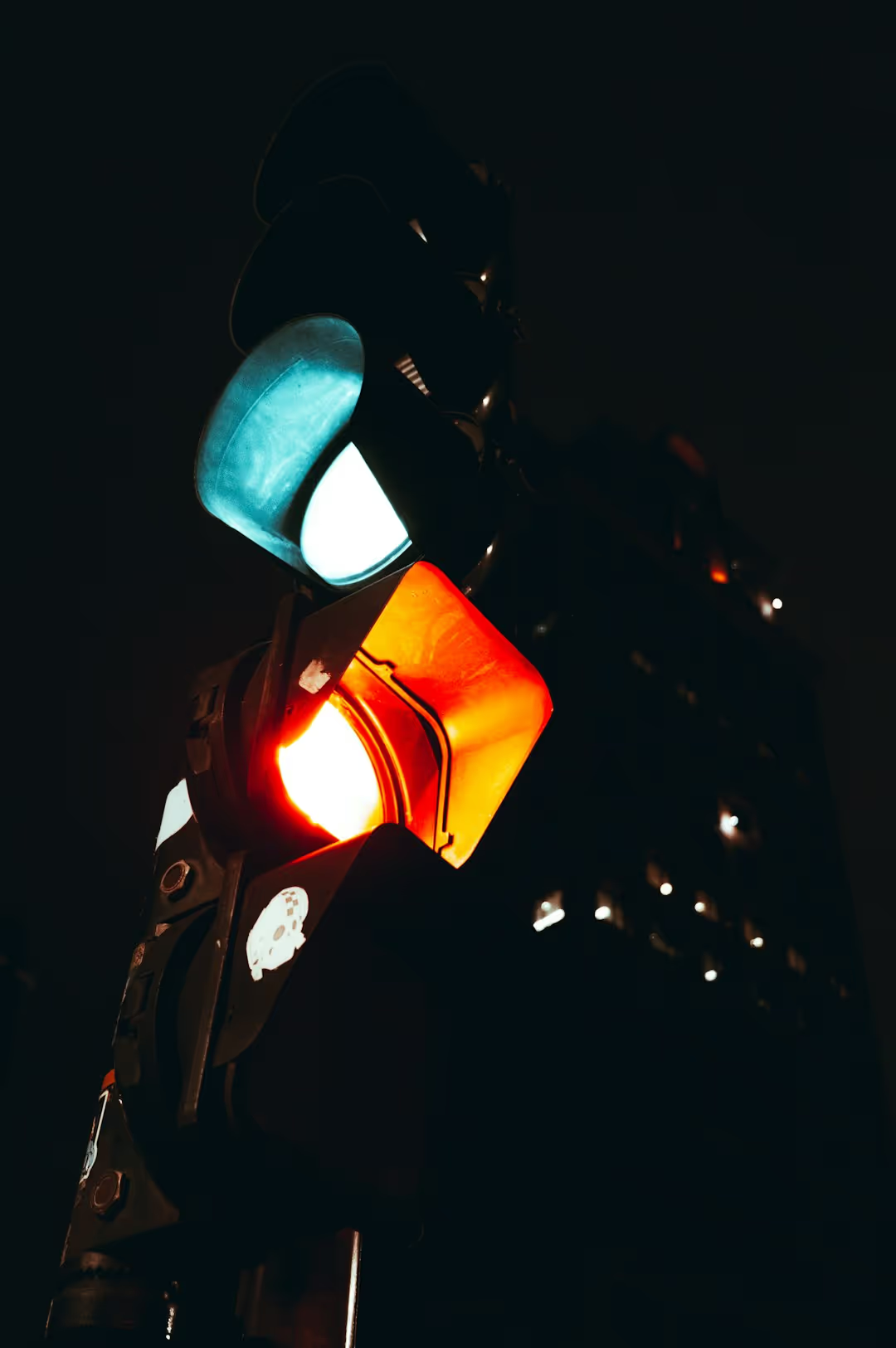
When a traffic signal appears to malfunction, preserve evidence of the signal and each driver’s response. A signal problem does not automatically establish a claim against the government or excuse every driver involved.
Document what the signal actually did
Identify the intersection, approach, lane, date, and precise time. Record whether the concern was a dark signal, conflicting indication, timing issue, or another condition. Witnesses and original video may be especially useful when the condition is intermittent.
A photograph after the collision may show the equipment but not the indication at impact. Mark the time and source of every recording. Do not enter the roadway or manipulate signal equipment to recreate the event.
Preserve records that could test the account
- Approach and intersection photographs, lane markings, signs, and sight lines.
- Original camera footage and witness contact information.
- Police information and any report of the signal problem.
- The identity of the agency controlling the signal and available repair, complaint, or maintenance records.
- Vehicle movements and the facts supporting each party’s response to the apparent malfunction.
Governmental immunity requires separate analysis
Claims against public entities are restricted by governmental immunity and specific exceptions. Do not assume a defective traffic signal necessarily qualifies under the highway exception. The governmental liability statutes and the governing decisions must be evaluated for the particular defendant and alleged defect.
Notice and filing requirements also depend on the claim. A general 120-day statement is not a complete answer to whether a signal case is legally available. Have the legal basis and timing checked promptly.
Other parties may still require investigation
Another driver’s conduct, a contractor’s role, and the injured person’s insurance can present separate questions. See the car-claim legal checklist and our car accident practice. Preserve the event evidence while responsibility is investigated.
Talk with Logeman & Iafrate
Request a free consultation or call (734) 994-0200 to discuss your situation with our Ann Arbor office. Bring the relevant records and any insurer correspondence. Advice about your claim depends on the facts, coverage, and applicable deadlines.
General information only; this article is not legal advice for an individual case.
Frequently Asked Questions
Does a broken signal guarantee a government claim?
No. Immunity, an applicable exception, causation, and claim-specific requirements must be addressed.
What if the signal worked normally afterward?
Preserve contemporaneous accounts, recordings, times, and complaint information. An intermittent issue requires careful proof.
Awards and Honors